Two identical windows can need completely different blinds if one faces north and the other faces west. Window direction decides when the glass gets direct sun, how strong that sun is and what problem the blind has to solve. This guide works through each aspect in turn, starting with the one people most often get wrong: north.
Quick answer: For north-facing windows, choose pale dim-out or day and night blinds that keep precious daylight. East-facing bedrooms need blackout for early summer sun. West-facing rooms need glare control for low afternoon and evening sun. South-facing windows get the most heat, so solar or reflective-backed fabrics work best there.
How does the direction of a window affect which blind you need?
The direction of a window affects which blind you need because it decides when direct sun reaches the glass and how high the sun is when it does. In the UK the sun rises in the east, sits due south at midday and sets in the west, so each aspect gets a different mix of light, glare and heat.
The detail changes through the year. The Royal Observatory explains that, depending on the time of year, sunrise varies from northeast to southeast and sunset from northwest to southwest. As the Natural Navigator guide to reading the sun sets out, in late June in Britain the sun rises close to north-east and sets close to north-west. In midwinter it rises nearer south-east and sets close to south-west, staying low in the southern sky all day.
That has three practical effects for blinds:
- Timing. East windows get morning sun, west windows get afternoon and evening sun, south windows get the middle of the day.
- Angle. Morning and evening sun is low, so it shines deep into a room and straight into your eyes. Midday summer sun is high and strikes the glass at a steeper angle.
- Season. North-facing windows can catch a little direct sun very early and very late on summer days, but almost none in winter.
What are the best blinds for north-facing windows?
The best blinds for north-facing windows keep as much daylight as possible, because these rooms rarely get direct sun. Pale dim-out fabrics and day and night blinds give privacy without making the room darker than it already is. Blackout only makes sense in a north-facing bedroom where full darkness is needed for sleep.
North light is steady, soft and cool. The downside is that a north-facing room can feel gloomy, especially in winter, and the wrong blind makes it worse. The main job of a blind here is privacy, not sun control.
What works on a north-facing window
- Pale dim-out. Cream, white or soft grey dim-out gives privacy in the evening and lets a gentle glow through by day.
- Day and night fabric. Alternating sheer and solid bands mean you can keep a view and daylight, then line the bands up for privacy. See our day and night roller blinds page for how they work.
- Warm tones. Warmer whites and soft neutrals can offset the cool tone of north light. Very cool greys can make the room feel colder.
- A blind that rolls fully clear. Every centimetre of glass counts, so fitting the blind so it clears the top of the glass when raised is worth checking.
North-facing rooms and warmth
North-facing rooms get little solar gain in winter, so they can feel cold. A closed blind in the evening adds a layer over the glass. If cold glass is a real problem, a thermal fabric is worth considering for the evenings, provided you open it fully in the daytime. Our thermal roller blinds page covers that in more detail.
What blinds suit east-facing windows?
East-facing windows suit blinds that deal with bright, low morning sun and then let light in for the rest of the day. For bedrooms, blackout is usually the right answer, because the summer sun rises early and close to north-east. For kitchens and breakfast rooms, a sunscreen fabric cuts morning glare while keeping a view.
The challenge with east is intensity at the start of the day. On a clear summer morning the sun is low and shines almost horizontally into the room, often well before anyone wants to be awake. By around midday the sun has moved round towards the south and the window drops out of direct light.
- East bedrooms: blackout fabric, with an outside-recess overlap if edge light bothers you. See our blackout roller blinds page.
- East kitchens: a sunscreen or moisture-resistant fabric that takes the glare off without shutting out the morning.
- East home offices: a sunscreen fabric helps if you work at a screen in the morning.
East-facing rooms are usually pleasant and cool by afternoon, so heat is rarely the main concern.
What blinds suit west-facing windows?
West-facing windows suit blinds that control strong, low afternoon and evening sun. Sunscreen fabrics cut glare while keeping the view, which suits living rooms and home offices. West-facing bedrooms and children’s rooms often need blackout, because on summer evenings the sun is still shining in at bedtime.
West sun is often the most troublesome for day-to-day living. It arrives in the afternoon, after the room and the building have already warmed through the day, and it comes in low, straight across a television or a desk. In summer it keeps going late into the evening.
- Glare on screens. A sunscreen fabric reduces glare while letting you see out. Darker sunscreen colours usually give a clearer view out than pale ones.
- Heat. West rooms can overheat on summer afternoons. Lowering a reflective-backed blind before the sun reaches the glass helps more than lowering it once the room is hot.
- Bedtime. West-facing children’s rooms often need blackout for light summer evenings.
Our solar roller blinds page explains how sunscreen fabrics reduce glare and heat.
What blinds suit south-facing windows?
South-facing windows suit blinds that manage heat and glare, because they get the most direct sun through the day. Sunscreen fabrics and blinds with pale or reflective backings work best. The same windows bring welcome warmth in winter, so choose a blind that rolls fully clear to let low winter sun in.
South is the aspect most people want and then find difficult in July. The midday summer sun is high, so it strikes the glass steeply, while the winter sun is low and reaches deep into the room. That seasonal difference is useful: in winter, open blinds on sunny days for free warmth; in summer, close them before the room heats up.
We cover summer heat in detail in our guide to keeping a south-facing room cool, so we will not repeat it here.
Which blind fabric is best for each window direction?
The best blind fabric for each window direction depends on the sun that aspect receives. North suits pale dim-out and day and night fabrics that preserve light. East bedrooms suit blackout. West rooms suit sunscreen for glare and blackout for bedrooms. South suits sunscreen and reflective backings for heat. The table gives a starting point.
| Aspect | When it gets direct sun | Main problem | Good fabric choices |
|---|---|---|---|
| North | Very little; a touch early and late in summer | Gloom and cold | Pale dim-out, day and night, thermal for cold evenings |
| East | Morning, very early in summer | Early wake-ups, morning glare | Blackout for bedrooms, sunscreen for kitchens and offices |
| South | Most of the day | Heat and glare in summer | Sunscreen, pale or reflective-backed fabrics |
| West | Afternoon and evening | Low glare, late sun at bedtime, heat | Sunscreen for living rooms, blackout for bedrooms |
Most homes have windows in two or more directions. North-east and south-west aspects combine the traits of both, so a south-west living room gets the midday heat of south and the evening glare of west.
How can you tell which way your window faces?
You can tell which way your window faces by standing at the window and checking the compass on your phone, or by looking at your home on a map app, where north is at the top. You can also watch the sun: if the window gets sun around midday, it faces broadly south.
- Use a phone compass. Stand with your back to the room, facing out through the glass, and read the direction. Keep away from radiators and metal frames, which can throw a compass off.
- Check a map. On most map apps north is at the top. Find your house and see which way the front and back walls face.
- Watch the sun. Morning sun means east, midday sun means south, evening sun means west. Around the middle of the day the sun is due south in the UK, around 1pm when clocks are on summer time.
- Note the shading. Trees, neighbouring buildings and balconies above change the picture. A south-facing flat under a deep balcony may get far less sun than the compass suggests.
Does window direction matter in London, Essex and Kent homes?
Window direction matters in London, Essex and Kent homes as much as anywhere, but local housing changes how it plays out. Terraced streets often have one aspect at the front and the opposite at the back, so front and back rooms need different fabrics. New-build flats with large glazing on one side feel their aspect strongly.
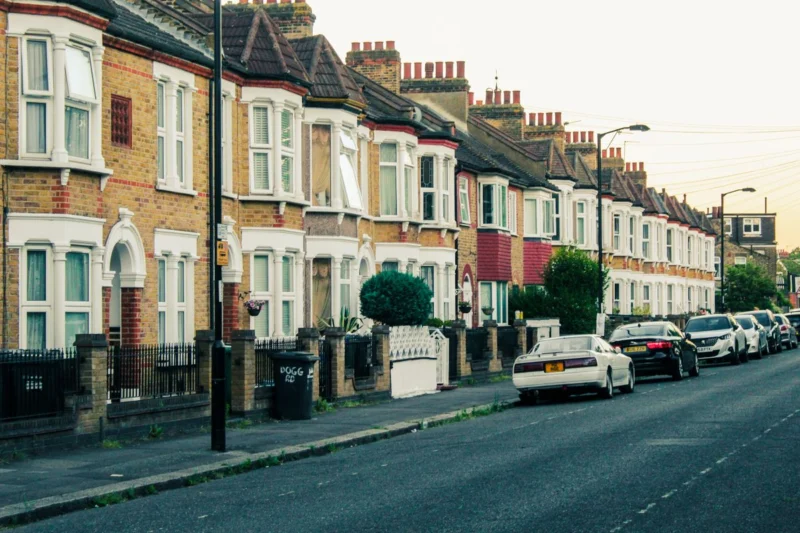
- Victorian and Edwardian terraces. Front bay and back bedroom face opposite ways. It is common for the front room to need privacy and the back bedroom to need darkness, or the other way round.
- 1930s semis. Large front bays catch sun from more than one direction, because each pane of the bay faces slightly differently.
- New-build flats. Floor-to-ceiling glazing on one elevation means aspect decides most of the room’s comfort, and a single-aspect west-facing flat can be hard work in summer.
- Loft conversions. Roof windows face the sky as well as a compass point, so they get more direct sun than a wall window facing the same way.
Common mistakes when choosing blinds by window direction
Common mistakes when choosing blinds by window direction include fitting blackout on a north-facing living room, choosing a pale dim-out for an east-facing bedroom, ignoring evening glare on west-facing screens, and buying the same fabric for every window in the house regardless of where the sun comes from.
- Judging a fabric in the showroom rather than against the real window at the time the sun is on it.
- Forgetting that a bay window has panes facing different directions.
- Assuming north-facing rooms need no sun control at all, even on summer evenings in a bedroom.
- Choosing a dark-backed blind on a sunny window, which absorbs more heat at the glass.
Getting advice for your windows locally
Getting advice for your windows locally is easiest with a free home measure. We cover London, Essex and North Kent, measure every window ourselves and bring fabric samples, so you can see how each one looks against your own glass and aspect. You get a written quote with no obligation, and our own team does the fitting.
If you would rather test fabrics first, you can order free fabric samples by post and hold them up at different times of day.
Key takeaways
- In the UK the sun rises in the east, is due south at midday and sets in the west, with sunrise and sunset shifting north in summer.
- North-facing rooms need blinds that keep light: pale dim-out and day and night fabrics.
- East-facing bedrooms need blackout for early summer sunrise.
- West-facing rooms need glare control in the afternoon and blackout for bedrooms at bedtime.
- South-facing rooms need heat control in summer but benefit from open blinds on sunny winter days.
- Check aspect with a phone compass or map, and account for shading from trees and buildings.
Frequently asked questions
Do north-facing windows need blackout blinds?
North-facing windows only need blackout blinds in bedrooms where full darkness matters, such as for shift workers or light sleepers. In summer the sun can reach a north-facing window very early and late in the day. For living rooms and kitchens facing north, a pale dim-out or day and night fabric keeps more daylight.
What colour blind is best for a north-facing room?
Pale, warm colours usually work best in a north-facing room, such as cream, soft white or warm neutrals. They let more light through a dim-out fabric and offset the cool tone of north light. Dark or very cool colours can make an already shaded room feel gloomy and cold, especially in winter.
Which window direction gets the most sun in the UK?
South-facing windows get the most direct sun in the UK, because the sun is due south at midday. West-facing windows get strong afternoon and evening sun, east-facing windows get morning sun, and north-facing windows get very little, only early and late on summer days. Shading from buildings and trees changes this.
Are sunscreen blinds good for west-facing windows?
Sunscreen blinds are a good choice for west-facing living rooms and offices, because they cut low afternoon glare and some heat while keeping a view out. Darker colours usually give a clearer view. For west-facing bedrooms, blackout is usually better, because summer evening sun can still be shining in at bedtime.
Should every window in the house have the same blind?
Every window does not need the same fabric, because each aspect has a different problem to solve. You can keep a consistent look from the street by choosing fabrics with similar backing colours, while using blackout in east bedrooms, sunscreen on west living rooms and pale dim-out on north-facing rooms.
Thinking about new blinds?
We measure and fit across London, Essex and North Kent. The visit is free and there is no obligation.