With landlords facing minimum energy standards and buyers paying more attention to energy ratings, it is a fair question to ask whether new blinds could nudge an EPC up a band. The short answer is no, and the reason is built into how the rating is calculated. The longer answer explains what does move the rating, and where blinds still earn their place.
Quick answer: No, blinds do not improve your EPC rating. The government’s SAP calculation already assumes every window has curtains or blinds that are closed about half the time, so adding them changes nothing. EPCs rate fixed features such as insulation, heating, hot water, lighting and glazing type. Blinds can still make rooms more comfortable.

Do blinds improve your EPC rating?
Blinds do not improve your EPC rating. An Energy Performance Certificate is calculated using the government’s Standard Assessment Procedure, which applies a fixed allowance for curtains or blinds to every window whether or not you have them. Fitting new roller blinds, even thermal ones, does not change any figure the assessor enters.
That can feel counter intuitive, because blinds do reduce heat loss through glass when they are closed. But an EPC is not a measurement of how your home actually performs. It is a standardised model of the building, designed so that two similar homes get similar ratings regardless of who lives there or how they furnish it.
In practice, the assessor records the building and its fixed systems. Curtains and blinds are handled by a standard assumption instead, which is explained in more detail below.
What does an EPC actually assess?
An EPC assesses the energy efficiency of a home’s fixed features and rates it from A, the most efficient, to G, the least. It looks at construction and insulation, the heating system and controls, hot water, lighting, windows and any renewable technology, then estimates running costs and carbon emissions using standard assumptions about how the home is used.
The rating comes from the Standard Assessment Procedure, known as SAP. According to the government’s guidance on SAP, it is the methodology used to estimate the energy performance of homes, both to show new homes comply with Building Regulations and to produce EPCs. For existing homes, assessors use Reduced data SAP, or RdSAP, which was introduced in 2005 as a simpler, lower cost method that relies on assumptions where detailed data is not collected.
A few points worth knowing:
- An EPC is a model, not a meter reading. Your actual bills depend on how you heat and use your home.
- Standard occupancy and heating patterns are assumed, so a home is rated the same whoever lives in it.
- The certificate includes recommendations for improvements that would raise the rating.
- EPCs are valid for 10 years, although a new one can be produced sooner, for example after improvements.
What does an EPC record about windows?
An EPC records the physical characteristics of each window rather than anything hung in front of it. Under the current RdSAP method, assessors note details such as the window size, glazing type, glazing age, frame type, orientation, whether it is draught proofed and whether it has shutters. These feed a calculated heat loss for the glazing.
Windows matter to the rating in two ways. They lose heat, which pushes the rating down, and they let in sunlight, which provides some free heat. Better glazing reduces the first without losing much of the second.
The typical window details used include:
- Glazing type. Single, double, triple or secondary glazing.
- Glazing age. Newer double glazing is generally assumed to perform better than older double glazing.
- Frame type. Different frame materials lose heat at different rates.
- Size and orientation. Larger windows lose more heat. South facing ones gain more sun.
- Draught proofing. Whether the window is sealed against air leaks.
Roller blinds are not on that list. The one window covering that RdSAP does recognise is the shutter, covered in a separate section below.
Why don’t blinds count towards an EPC?
Blinds don’t count towards an EPC because the SAP calculation already includes a standard allowance for them. The published SAP specification states that the effective U-value of every window takes account of the assumed use of curtains or blinds, on the assumption that they will be open about half the time. Real blinds cannot add to that.
The detail is in the SAP 10.2 specification published by BRE. It gives a formula for the effective window U-value, which is the figure used for heat loss through windows:
Effective window U-value = 1 / (1 / window U-value + 0.04)
The specification explains that the 0.04 figure is based on a curtain or blind thermal resistance of 0.08, halved because curtains or blinds are assumed to be open about half the time. In plain English:
- Every window in every home is modelled as if it has curtains or blinds.
- Those coverings are treated as a modest extra layer of insulation.
- They are assumed to be closed half the time.
- A home with no blinds at all gets the same allowance as a home with the best thermal blinds.
A fixed assumption also makes practical sense for a rating that lasts years. Blinds and curtains can be taken down or swapped at any time, whereas insulation and glazing stay with the building.
This is general information about how EPCs are calculated, not professional advice. For advice on a specific property, speak to an accredited domestic energy assessor.
Do shutters count on an EPC?
Shutters can count on an EPC under the current RdSAP method, which added window shutters as a data item. Assessors record whether shutters are present and whether they are insulated, and their presence reduces the heat loss assumed through that window. They are defined as rigid products, which is why fabric blinds do not qualify.
Assessor guidance on RdSAP 10 describes a shutter as a product whose curtain is made of a rigid material installed to modify thermal and visual properties. A roller blind uses flexible fabric, so it falls outside that definition, however thick the fabric.
That does not automatically make shutters the right choice for your home, and we do not supply them. Any change to the rating depends on the window, the shutter and how the assessor records it. If you are weighing the two up for other reasons, our comparison of blinds vs shutters sets out how the two differ.
What actually improves an EPC rating?
What actually improves an EPC rating is changing the fixed fabric and systems of the home: insulation, heating, hot water, lighting, glazing and renewables. The recommendations section of your EPC lists the measures the assessor’s software expects to make the biggest difference for your particular property, in a suggested order.
Typical measures that appear on EPC recommendations include:
- Loft insulation, where the existing depth is low.
- Cavity or solid wall insulation, depending on how the walls are built.
- Floor insulation, particularly for suspended timber floors.
- Heating upgrades, such as a more efficient boiler or a heat pump.
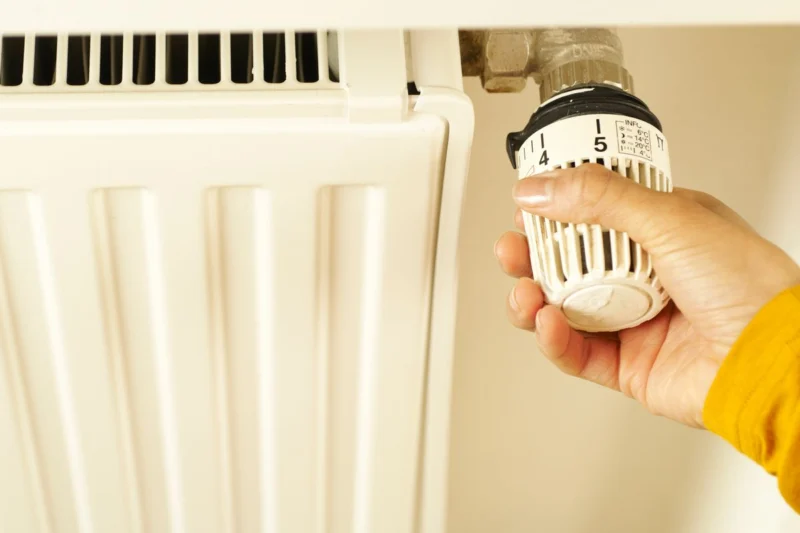
- Heating controls, including room thermostats and thermostatic radiator valves.
- Hot water improvements, such as cylinder insulation.
- Low energy lighting throughout.
- Double or triple glazing replacing single glazing.
- Solar panels for electricity or hot water.
Which of these helps most depends heavily on the home. A Victorian terrace with solid walls and single glazed sashes has a very different list from a 2010s flat in East London. The recommendations are specific to each certificate, so read your own rather than a generic list.
Do landlords need blinds to meet the minimum EPC rating?
Landlords do not need blinds to meet the minimum EPC rating, and blinds will not help them reach it. In England and Wales, domestic private rented homes covered by the Minimum Energy Efficiency Standard regulations must have an EPC rating of at least E, unless a valid exemption is registered. Meeting that standard means improving fixed features.
The government’s landlord guidance on the minimum standard confirms that since 1 April 2020, landlords cannot let or continue to let properties covered by the regulations if the EPC rating is below E, unless an exemption applies. It also sets a cost cap: landlords are not currently required to spend more than £3,500 including VAT on improvements. The guidance notes that the government aims for as many privately rented homes as possible to reach band C by 2030.
For landlords, blinds are still worth thinking about for other reasons: tenant comfort, privacy, and reducing complaints about cold or overheating rooms. Our guide to blinds for landlords looks at choosing blinds for rental properties.
Rules on rented property change. Check the current government guidance before relying on any figure here.
If blinds do not change the EPC, why fit them?
Fitting blinds is still worthwhile even though they do not change the EPC, because the rating does not measure comfort in your own home. Closed blinds reduce heat loss through glass on winter evenings, cut glare and solar heat gain in summer, and give privacy. Those benefits show up in how rooms feel and, modestly, in heating use.
The real world effect depends on fit and habits. A blind fitted inside the recess, dropping close to the sill and closed at dusk, does more than a loosely hung one. Our article on whether blinds keep heat in looks at the test evidence and its limits.
Blinds also help in summer, which the EPC rating does not reflect at all. A south or west facing room with large windows can overheat on sunny days, and a closed blind stops some of that sunlight before it warms the room. Our guide on keeping a south facing room cool covers that side.
Where blinds make most difference to comfort:
- Older single glazed windows, especially sashes that cannot be replaced.
- Large bays in 1930s semis, which are common across Essex and outer London.
- Bedrooms, where closing blinds at night makes the room feel less chilly.
- Rooms that overheat in summer, such as top floor flats and loft conversions.
Common myths about blinds and EPC ratings
Common myths about blinds and EPC ratings include the idea that thermal blinds are a quick way to raise a band, that an assessor will note blinds on the certificate, that blinds can help a rental property meet the minimum standard, and that a better EPC always means lower bills. None of these is correct under the current method.
- “Thermal blinds will boost my rating.” They will not. The allowance for curtains and blinds is fixed in the calculation.
- “The assessor will record my blinds.” RdSAP records shutters, not fabric blinds.
- “Blinds can get a rental to band E.” Only fixed improvements change the rating.
- “A better EPC guarantees lower bills.” The EPC is a model. Actual bills depend on use, tariffs and weather.
- “Blinds make no difference to energy at all.” They can reduce heat loss through glass when closed. It just is not counted on the certificate.
Getting advice on blinds for comfort locally
Getting advice on blinds for comfort locally means looking at each window’s glazing, fit and exposure. We offer a free home measure across London, Essex and North Kent, bring fabric samples including thermal and blackout options, and give a written quote with no obligation. We will be honest that blinds are about comfort, not your EPC.
If you are also planning EPC improvements, it makes sense to sort insulation, heating and glazing first, then choose blinds to suit the finished windows. You can check whether we cover your postcode on our areas we cover page.
Key takeaways
- Blinds do not improve an EPC rating. SAP assumes every window has curtains or blinds closed about half the time.
- EPCs rate fixed features: construction, insulation, heating, hot water, lighting, glazing and renewables.
- RdSAP records glazing type, age, frame, size, orientation, draught proofing and shutters, but not fabric blinds.
- Rented homes in England and Wales covered by the minimum standard need at least an E rating, reached through fixed improvements.
- Blinds still help comfort, privacy and summer heat, and reduce heat loss through glass when closed.
Frequently asked questions
Do thermal blinds count on an EPC?
No. Thermal blinds are not recorded on an EPC. The SAP calculation gives every window the same fixed allowance for curtains or blinds, assumed closed about half the time, whatever is actually fitted. Thermal blinds can still reduce heat loss through glass in real life, but that benefit is not reflected in the rating.
Do curtains improve an EPC rating?
No. Curtains are treated the same way as blinds. The SAP method already assumes every window has curtains or blinds, so hanging heavy lined curtains does not change the figures an assessor enters. Curtains and blinds are seen as the occupant’s furnishings, not part of the building being rated.
Does double glazing improve an EPC?
Replacing single glazing with double or triple glazing can improve an EPC, because glazing type, age and frame are recorded for each window. How much it helps depends on the rest of the home. In many properties, insulation or heating upgrades make a bigger difference, so check the recommendations on your own certificate.
Can a landlord use blinds to meet the minimum EPC rating?
No. Blinds do not change the EPC rating, so they cannot help a rented home reach the minimum band E required under the Minimum Energy Efficiency Standard in England and Wales. Landlords need fixed improvements such as insulation, heating upgrades or better glazing, or a registered exemption where one applies.
Do shutters improve an EPC rating?
Shutters can be recorded under the current RdSAP method, including whether they are insulated, and their presence reduces the heat loss assumed through that window. Fabric blinds are not recorded in the same way. Any effect on the overall rating depends on the property, so ask an accredited assessor about a specific home.
Thinking about new blinds?
We measure and fit across London, Essex and North Kent. The visit is free and there is no obligation.