Most people choose a roller blind by fabric and colour, then pick the control as an afterthought. That is backwards for some windows. How you raise and lower the blind decides whether it gets used every day, whether it is safe around small children, and whether a high or awkward window is usable at all.
Quick answer: Chain roller blinds suit most windows and handle wide, heavy blinds well, but need a child safety device. Cordless blinds have no chain, so they look tidier and remove the loop hazard, but you must reach the bottom bar. Motorised blinds suit high, wide or hard to reach windows and cost the most.
Which is better, cordless or chain roller blinds?
Cordless vs chain roller blinds comes down to reach, size and safety. Chain blinds give fine control, work on large and heavy blinds, and suit windows you cannot easily reach. Cordless blinds remove the hanging chain completely, which is safer and neater, but they need you to reach the bottom bar and suit smaller blinds best.
Neither is better in every room. A cordless blind in a child’s bedroom makes obvious sense. The same cordless blind on a tall window behind a kitchen worktop would be a daily struggle. Many homes end up with a mix, and that is usually the right answer.
Motorised blinds are the third option, and for some windows they are the only practical one. They are covered in more detail below.
How does each roller blind control work?
Each roller blind control works differently. A chain blind uses a continuous loop of chain turning a clutch at one end of the roller. A cordless blind uses a spring inside the tube, so you pull the bottom bar down and push it up. A motorised blind uses a small motor inside the tube, operated by a switch or remote.
Chain control
The chain runs over a clutch mechanism at one end of the blind. Pull one side of the loop and the blind goes down. Pull the other and it goes up. The clutch holds the blind at any height you stop it. The chain sits on the left or right side, chosen when the blind is made.
Cordless (spring) control
A tensioned spring inside the roller does the lifting. You lower the blind by pulling the bottom bar or a small handle, and it holds at the height you leave it. To raise it, you give a gentle pull and guide it up. There is nothing hanging down the side of the window.
Motorised control
A tubular motor sits inside the roller. It is operated by a wall switch, a handheld remote, or in some systems an app or timer. Motors are powered either by a rechargeable battery or by mains electricity. Our page on motorised roller blinds covers the options in detail.
How do chain, cordless and motorised blinds compare?
Chain, cordless and motorised blinds compare differently on ease of use, child safety, reach, size limits, cost and maintenance. Chain is the versatile, lower cost standard. Cordless trades reach and size for a cleaner, safer look. Motorised solves reach and size problems at a higher price and with power to think about.
| Factor | Chain | Cordless | Motorised |
|---|---|---|---|
| Ease of use | Easy, precise height control | Very easy on small blinds within reach | Easiest, press a button |
| Child safety | Safe when fitted with a tensioner or other safety device | No hanging loop | No hanging loop |
| Hard to reach windows | Good, the chain hangs to a reachable height | Poor, you must reach the bottom bar | Best |
| Wide or heavy blinds | Good | Limited, springs suit smaller sizes | Good |
| Cost tendency | Usually the lowest | Usually a little more than chain | Usually the highest |
| Maintenance | Occasional check of chain and tensioner | Very little | Charging or power supply, occasional reset |
| Look | Visible chain at one side | Cleanest, nothing hanging | Clean, may have a visible cable or charging point |
Cost here is only a general tendency. The actual price depends on size, fabric and window. Our price estimator gives a rough idea for your own windows.
Which roller blind control is safest for children?
The safest roller blind controls for children are cordless and motorised, because there is no hanging loop at all. Chain blinds can be made safe with a child safety device, such as a tensioner that fixes the chain to the wall. The standard BS EN 13120 sets these requirements, and every chain blind we fit has them.
Looped cords and chains are a strangulation risk for young children. RoSPA’s blind cord safety advice says a toddler can lose consciousness in a few seconds and die within two to three minutes, and that nine children died from blind cord strangulation between April 2019 and March 2022. RoSPA suggests considering a cordless model where you can, and positioning cots, beds and furniture away from windows.
BS EN 13120 was amended in 2014 to tighten the child safety requirements for internal blinds. The industry’s Make It Safe guide for surveyors and installers explains that installers must fit the supplementary safety devices securely, leave warning labels and instructions, and show customers how the blind works.
For a chain blind, that typically means a tensioner fixed to the wall or window frame, keeping the chain taut so it cannot form a loose loop. It only works if it stays fixed, so it should never be unclipped or removed. Our page on child safe roller blinds explains the devices and choices for family homes.
This is general safety information. Follow the manufacturer’s instructions and the RoSPA advice linked above.
Which control suits wide or heavy blinds?
Chain or motorised control suits wide or heavy blinds best. A chain and clutch give you mechanical advantage, so even a large blind can be raised smoothly. A motor takes the effort away entirely. Cordless spring systems have size limits and work best on small and medium blinds, where the spring tension is easy to balance.
Weight comes from width, drop and fabric. A wide blackout blind on a patio door or a large living room window is much heavier than a narrow sunscreen blind in a bathroom. The heavier the blind, the more a cordless spring has to cope with, and the harder it can be to raise and lower smoothly by hand.
Signs a window may be better with chain or motor:
- Very wide windows, such as patio doors and large picture windows.
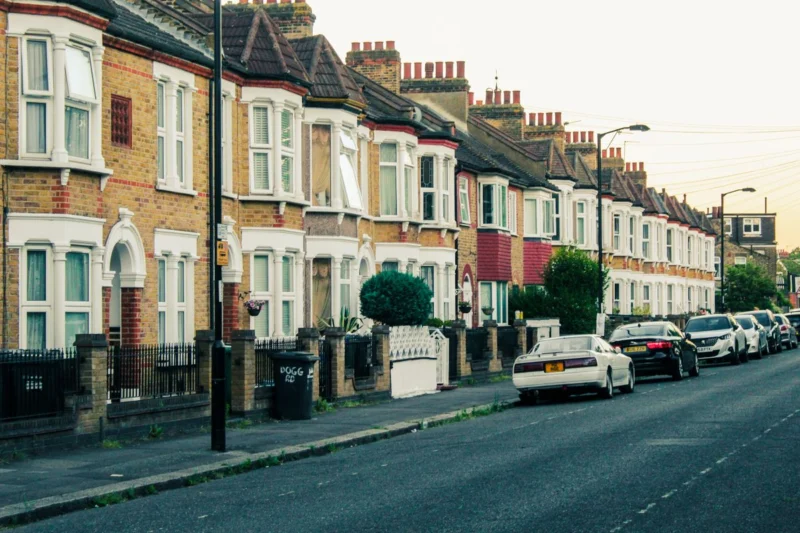
- Long drops, such as tall windows in Victorian and Edwardian houses.
- Heavy fabrics, such as blackout or thermal.
- Windows where the blind is raised and lowered many times a day.
If you want cordless on a larger window, ask at your measure whether it suits that size and fabric.
Which control is best for hard to reach windows?
Motorised control is best for hard to reach windows, because you operate the blind from a switch or remote without touching it. Chain control is the next best, as the chain can hang down to a reachable height. Cordless blinds are the least suitable, because you have to reach the bottom bar to raise and lower them.
Common hard to reach windows include:
- Windows behind kitchen worktops or sinks. Leaning over a sink to reach a bottom bar is awkward every day. Our guide to the best roller blinds for kitchens covers fabric choices too.
- High windows and landing windows above stairs.
- Skylights and roof windows, which need specialist systems.
- Very tall windows, where the blind rolls up well above head height.
- Windows behind fixed furniture, such as beds or sofas that cannot easily be moved.
Reach also matters for people. Older family members, anyone with limited grip or shoulder movement, and wheelchair users may find a chain or a bottom bar hard to manage. A motorised blind on a switch at a comfortable height can make a real difference to independence in the rooms used most.
Battery or mains motorised blinds: what is the difference?
Battery and mains motorised blinds differ mainly in installation and upkeep. Battery motors need no wiring, so they can be fitted to almost any window, but must be recharged from time to time. Mains motors need an electrical supply near the window, usually installed by an electrician, but never need charging.
- Battery motors are the simpler retrofit. They suit single blinds, rented homes and rooms where you do not want to chase cables into walls. How often they need charging depends on the size of the blind and how often it is used.
- Mains motors suit new builds, renovations and large blinds used several times a day, where running a cable during other work is straightforward.
Both types can usually be operated by remote, and some can be linked to timers or smart home apps. We keep this overview brief here. The detail on motor options, controls and installation is on our motorised roller blinds page.
Which control suits which room?
Which control suits which room depends on who uses it and how the window is reached. As a starting point, cordless or motorised suits children’s rooms, chain or motorised suits kitchens and large living room windows, and any control works in adult bedrooms and bathrooms, as long as chains have their safety devices fitted.
| Room | Good choices | Why |
|---|---|---|
| Children’s bedrooms and nurseries | Cordless or motorised | No hanging loop at all |
| Living rooms | Chain or motorised | Large, often heavy blinds used daily |
| Kitchens | Chain or motorised | Windows often behind worktops or sinks |
| Adult bedrooms | Any | Usually easy to reach, often blackout fabric |
| Bathrooms | Chain or cordless | Small windows, easy to reach |
| Landings and stairwells | Chain or motorised | High or awkward windows |
| Home offices | Any | Frequent adjustment through the day |
If young children live in or regularly visit the house, you may prefer cordless or motorised throughout, even where a chain would work, so that no room needs extra thought.
How much maintenance does each control need?
Maintenance for each control is light. Chain blinds need the chain and safety device checked now and then. Cordless blinds need almost nothing, although springs can lose tension over many years. Motorised blinds need batteries charging or a working power supply, and occasionally a simple reset of the remote or limits.
- Chain. Check the tensioner is still fixed and the chain runs freely. A chain that jumps or slips can point to a worn clutch.
- Cordless. If the blind creeps up or will not stay down, the spring tension may need adjusting.
- Motorised. Charge battery motors when they slow down, and keep the remote’s battery fresh.
If a blind will not roll up properly, our guide to what to do when a roller blind won’t roll up covers the common causes.
Common mistakes when choosing blind controls
Common mistakes when choosing blind controls include picking cordless for windows you cannot reach, choosing cordless for very large or heavy blinds, putting the chain on the wrong side, removing chain safety devices, and assuming motorised is only for luxury homes when it can be the practical answer for awkward windows.
- Chain on the wrong side. Think about furniture, window handles, radiator valves and which hand you use.
- Removing the tensioner. It is there for a reason, and a loose loop is exactly the risk the standard is designed to prevent.
- One control for every window. Mixing controls by room is normal and usually works best.
Getting advice on blind controls locally
Getting advice on blind controls locally is easiest when someone can see each window, how high it is and what is in front of it. We offer a free home measure across London, Essex and North Kent, bring fabric samples, and give a written quote with no obligation. Any chain blinds we fit come with BS EN 13120 safety devices.
Key takeaways
- Chain blinds are versatile, suit wide and heavy blinds and hard to reach windows, and need a child safety device.
- Cordless blinds have no hanging loop and look tidy, but you must reach the bottom bar and they suit smaller blinds.
- Motorised blinds solve reach and size problems and have no loop, at a higher cost.
- BS EN 13120 sets child safety requirements for internal blinds with cords and chains.
- Battery motors need no wiring but need charging. Mains motors need a power supply near the window.
- Choose controls room by room rather than one type for the whole house.
Frequently asked questions
Are cordless roller blinds worth it?
Cordless roller blinds are worth it in children’s rooms and anywhere you want a clean look with nothing hanging at the side. They work best on small and medium windows you can reach easily. On large, heavy or hard to reach blinds, a chain or motorised control is usually more practical.
Are chain roller blinds safe for children?
Chain roller blinds can be safe when fitted with the child safety device required by BS EN 13120, such as a tensioner fixed to the wall that keeps the chain taut. The device must stay fixed. For nurseries and children’s bedrooms, many parents still prefer cordless or motorised blinds, which have no loop at all.
Can you get cordless blinds for large windows?
Cordless spring systems have size and weight limits, so very wide or long blinds, especially in heavy fabrics, may not suit them. For large windows, chain or motorised controls are usually the better choice. Ask at your measure whether cordless suits the size and fabric you have in mind.
Do battery motorised blinds need wiring?
No. Battery motorised blinds have a rechargeable battery, so they need no wiring into the mains and can be fitted to most windows. They do need charging from time to time, depending on blind size and use. Mains powered motors need an electrical supply near the window instead.
Which side should the chain be on a roller blind?
Put the chain on the side that is easiest to reach and clear of obstructions such as furniture, window handles, radiator valves and curtains. Many people prefer the side nearest the door or their dominant hand. The side is set when the blind is made, so decide at the measure.
Thinking about new blinds?
We measure and fit across London, Essex and North Kent. The visit is free and there is no obligation.