A south-facing room is lovely in January and hard work in July. Once the sun has poured through the glass for a few hours, the heat is in the room and it is slow to leave. The good news is that most of the fix is free: timing, airflow and the right blind.
Quick answer: To keep a south-facing room cool without air conditioning, close blinds before direct sun reaches the window, keep them closed through the hottest hours, then open windows at night when outside air is cooler to flush heat out. Light or reflective backed blinds help most. Switch off heat-producing appliances and lights you are not using.
Why do south-facing rooms get so hot?
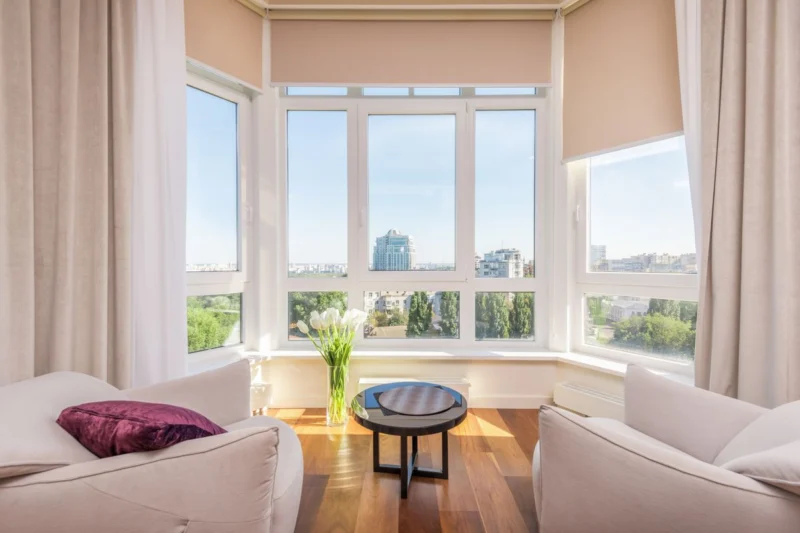
South-facing rooms get hot because they receive direct sunshine for most of the day in the UK. Sunlight passes through glass, warms floors, furniture and walls, and that heat is released back into the room. Glass lets short-wave sunlight in easily but traps much of the heat it becomes, so temperatures build steadily.
West-facing rooms often feel even worse in practice. They catch low, intense afternoon and evening sun at the point when the house has already warmed up all day, so the heat arrives on top of heat. East-facing rooms get strong morning sun, which matters for bedrooms.
Some UK homes suffer more than others:
- New-build flats with large glazed areas, good insulation and limited opening windows can hold heat well into the night. Many recent developments in East London are like this.
- Loft conversions sit right under the roof, often with roof windows angled straight at the sky.
- Conservatories and glazed extensions are mostly glass, so solar gain is huge.
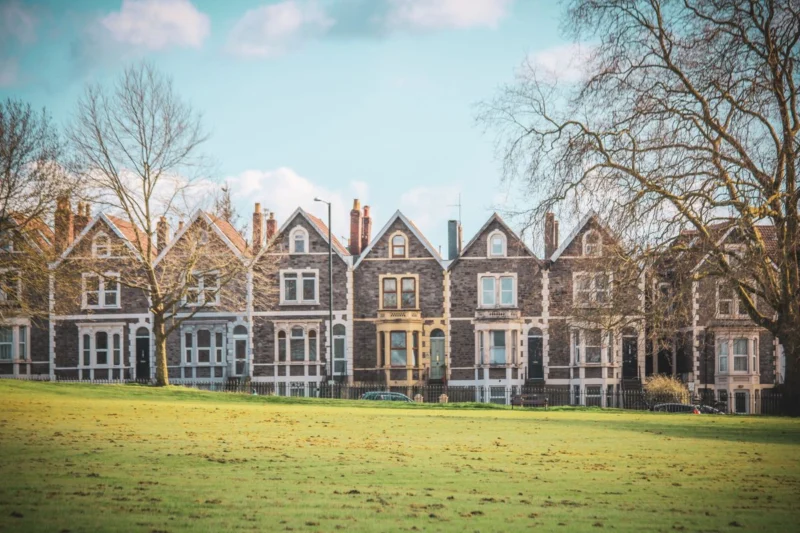
- Top-floor rooms in Victorian terraces and 1930s semis collect rising heat from the rest of the house.
Should blinds be open or closed in a heatwave?
Blinds should be closed in a heatwave on any window that gets direct sun during the day, then opened at night once the outside air is cooler. This is official advice: UKHSA and the NHS both recommend closing curtains and blinds on sun-exposed windows by day and opening windows when it is cooler outside.
The UKHSA “Beat the heat” guidance advises closing blinds and curtains on windows exposed to direct sunlight during the day, closing external shutters or shades if you have them, and opening windows when the air feels cooler outside than in, for example at night, to get air flowing through your home. The NHS heatwave advice says the same: close windows, curtains and blinds during the day and open them at night.
Closing windows during the day can feel wrong, but on a hot afternoon the outside air is often warmer than the room. Opening the window then just lets more heat in.
When should you close blinds to keep the heat out?
Close blinds before the sun reaches the window, not once the room already feels hot. Once sunlight has warmed the floor, sofa and walls, closing the blind stops new heat but cannot remove the heat already stored. For a south-facing room that often means late morning; for west-facing rooms, early afternoon.
A simple routine that works for most homes:
- Early morning: close east-facing blinds before the sun rises high. Shut windows once the outside air starts to warm.
- Late morning: close south-facing blinds before the sun comes round.
- Early afternoon: close west-facing blinds, even if the room still feels fine.
- Evening: keep them closed until the sun has dropped off the glass.
- Night: once it is cooler outside than in, open blinds and windows where it is safe to do so, ideally on opposite sides of the home.
- Morning: close up again before the day heats up.
If you are out at work all day, this routine is where motorised roller blinds earn their keep, because they can be set to close on a timer while nobody is home.
How does night-time ventilation cool a room?
Night-time ventilation cools a room by replacing warm indoor air with cooler outside air, and by drawing heat out of walls, floors and furniture while the sun is down. It works best as cross-ventilation: windows open on opposite sides of the home so air flows through, rather than one window open in a closed room.
A few practical points:
- Open windows on two sides. Front and back in a terrace, or opposite ends of a flat, lets air move.
- Open internal doors. Air needs a route through the house.
- Use the height of the house. Warm air rises. Opening a top-floor or loft window with a lower window open elsewhere helps draw air through.
- Think about security and safety. Only open windows where it is safe, especially on ground floors and where there are young children. Restrictors help.
- Fans help air move. UKHSA guidance says electric fans can be used if the air temperature is below 35°C, but not aimed directly at your body.
Night ventilation is less effective in dense urban areas, where the outside air itself stays warm after dark. That is one reason heat in London can feel so persistent.
Which blinds help keep a south-facing room cool?
The best blinds for keeping heat out have a light or reflective backing facing the window, cover the glass closely, and suit how you use the room. Sunscreen blinds cut heat while keeping a view, thermal and blackout fabrics block more light and heat, and dim-out suits rooms that just need softer light.
| Blind type | Heat control | Light and view | Best rooms |
|---|---|---|---|
| Sunscreen (solar) | Good, especially light or metallised backs | Keeps a view out and some daylight | Living rooms, home offices, kitchens |
| Thermal | Strong, with a reflective or insulating layer | Usually little or no light through | Bedrooms, loft rooms, west-facing rooms |
| Blackout | Good, especially with a light or white back | No light or view when down | Bedrooms and nurseries |
| Dim-out / light filtering | Moderate | Soft light, no view | Rooms where you want daylight without glare |
Our sunscreen roller blinds are the usual pick for living spaces where you still want to see the garden. For bedrooms that overheat, thermal roller blinds help keep heat out in summer and in during winter. If you are torn between the two main options, our comparison of blackout vs sunscreen roller blinds sets out the differences.
Do light or dark blinds keep a room cooler?
Light or reflective blinds usually keep a room cooler, because they bounce more sunlight back out through the glass before it turns to heat. Dark fabrics absorb more sunlight, warm up themselves and release some of that heat into the room. What matters most is the colour facing the window, not the side you see.
That is why many heat-control fabrics have a white, pale or metallised back with a different colour facing the room. You get the decor you want inside and a reflective face outside.
There is a trade-off with sunscreen fabrics. Darker sunscreens give a clearer view out and less glare, while lighter ones reflect more heat. In a south-facing living room where heat is the main problem, a light or two-tone fabric is usually the better choice. In a home office where glare on a screen is the bigger issue, a darker fabric may suit better.
Do blinds work better inside or outside the window?
External shading, such as awnings, external shutters and external blinds, stops sunlight before it reaches the glass, so it is generally more effective at keeping heat out than anything fitted inside. Internal blinds still help a great deal, but some heat has already passed through the glass before the blind reflects or absorbs it.
HD Blinds fits internal roller blinds only, so we do not supply awnings or external shutters. If you are planning an extension or a major refurbishment, external shading and overhangs are worth discussing with your architect or builder. For most people, a well-chosen internal blind, closed at the right time, is the practical and affordable step.
To get the most from an internal roller blind:
- Fit it close to the glass. A blind inside the window recess traps a layer of air against the pane.
- Reduce side gaps. Accurate made-to-measure sizing keeps gaps small.
- Choose a reflective back. This is the single biggest fabric choice for heat.
How do you keep a conservatory or loft room cool?
Conservatories and loft rooms need shading on the roof glass as well as the walls, because overhead glazing catches the high summer sun at its strongest. Roof blinds on conservatory panels and blinds made for roof windows, combined with good ventilation through roof vents or opening windows, make the biggest difference to comfort.
For conservatories:
- Shade the roof first. Side windows alone leave the biggest heat source untouched.
- Use reflective or light-backed fabrics.
- Open roof vents and doors early in the day and at night to let hot air escape.
For loft conversions:
- Roof windows face the sky, so they bring in sun for longer than an upright window.
- Blinds made for roof windows run in side channels, so they stay put when the window is tilted and cover the glass fully.
- Open the roof window at night to let rising warm air out of the top of the house.
See our pages on conservatory roller blinds and skylight roller blinds for the options we fit.
Why do homes in London stay hot at night?
Homes in London often stay hot at night because of the urban heat island effect, where temperatures in cities are higher than in surrounding rural areas. Buildings, roads and paving absorb heat during the day and release it after dark, so the outside air cools less, which weakens night ventilation.
The Greater London Authority’s London urban heat island mapping shows how temperatures vary across the capital during warm summer weather. For people in dense inner areas such as Hackney, Camden or Stratford, this means daytime heat control matters even more: if you cannot rely on a cool night to reset the room, stopping the heat getting in is the main defence.
Suburban homes in outer London, Essex and North Kent often have more greenery and cooler nights, which makes the “close by day, open by night” routine work better. The principle is the same everywhere.
Common mistakes
- Closing blinds too late. Once the room is warm, the heat is stored in the furnishings.
- Opening windows on a hot afternoon. If it is hotter outside, you are letting heat in.
- Choosing a dark-backed fabric for heat. It absorbs sunlight and warms the room.
- Leaving the roof glass unshaded. In conservatories and lofts, overhead glass is the main source of heat.
- Forgetting internal heat. Lights, televisions and chargers all add warmth. Switch off what you are not using.
Where can you get heat-reducing blinds fitted in London, Essex and North Kent?
Heat-reducing roller blinds can be measured and fitted by HD Blinds across London, Essex and North Kent. We visit to measure every window ourselves, bring sunscreen, thermal and blackout fabric samples so you can see the reflective backs in person, and give a written quote with no obligation. Our own team fits every blind.
If your problem room is a conservatory, loft or a wall of glass in a new-build flat, we will look at which windows take the most sun and recommend fabrics to suit. Blinds with cords or chains are fitted with the child safety devices required by BS EN 13120.
Key takeaways
- Close blinds on sun-facing windows before the sun reaches the glass.
- Open windows at night when outside air is cooler, ideally on opposite sides of the home.
- Light or reflective backed fabrics keep heat out better than dark ones.
- External shading is most effective, but well-fitted internal blinds make a real difference.
- In conservatories and loft rooms, shade the roof glass first.
- In dense parts of London, daytime heat control matters more because nights stay warm.
Frequently asked questions
Is it better to keep blinds open or closed in hot weather?
Keep blinds closed on windows that get direct sun during the day, then open them at night when outside air is cooler. UKHSA and NHS guidance both recommend this. Closing them before the sun reaches the glass works much better than waiting until the room already feels warm.
Do blackout blinds keep heat out?
Blackout blinds help keep heat out, especially with a white or light back facing the window, because they block sunlight completely when down. A dark-backed blackout blind absorbs more heat. For heat control with a view out, a light-backed sunscreen blind is often a better choice for living spaces.
What colour blind is best for a south-facing window?
For heat, a light, white or metallised back facing the glass is best because it reflects sunlight back out. The side facing the room can be any colour you like. If glare on a screen matters more than heat, a darker sunscreen fabric may be the better compromise.
Should I open windows during the day in a heatwave?
Usually not while the outside air is hotter than the room. Official advice is to keep sun-facing windows and blinds closed during the day and open windows when it feels cooler outside, such as at night or early morning. Cross-ventilation through opposite windows cools the home fastest.
Do thermal blinds work in summer as well as winter?
Yes. Thermal roller blinds with a reflective or insulating layer help keep heat out in summer and keep warmth in during winter. They work best fitted close to the glass inside the recess, closed before the sun reaches the window, and suit bedrooms, loft rooms and west-facing rooms well.
Thinking about new blinds?
We measure and fit across London, Essex and North Kent. The visit is free and there is no obligation.