Blinds and shutters both control light and privacy, but they suit different windows, budgets and priorities. This is an honest blinds vs shutters comparison of cost, light control, insulation and lifespan. One thing to be clear about first: HD Blinds measures and fits made-to-measure roller blinds only. We do not supply or fit shutters.
Quick answer: Shutters usually cost more and suit period bay windows where a solid, architectural look matters. Roller blinds usually cost less and win on full blackout, small or shallow recesses, bathrooms, large glazing and motorisation. Shutters give adjustable light through louvres; a blackout roller blind gives a darker room. Choose by window and room, not trend.
What is the difference between blinds and shutters?
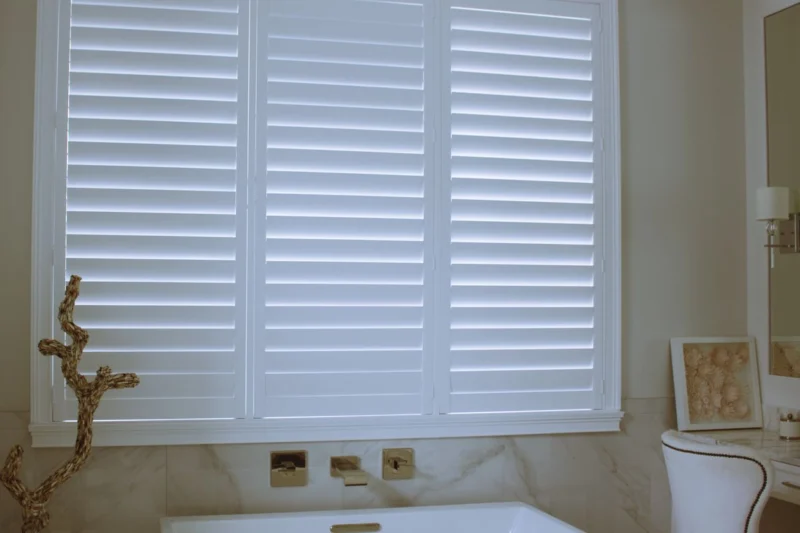
The difference between blinds and shutters is mainly construction. Shutters are rigid panels, usually timber, composite or vinyl, fixed to a frame and hinged so they open like small doors. Blinds are softer or lighter coverings that roll, fold or tilt. Roller blinds use a single piece of fabric that winds onto a tube above the window.
Interior shutters in UK homes are usually plantation-style, with adjustable horizontal louvres. You tilt the louvres to angle light and open the whole panel to clear the window. Common styles include full height, tier-on-tier (top and bottom sections that open separately), café style (covering the lower half only) and solid panel.
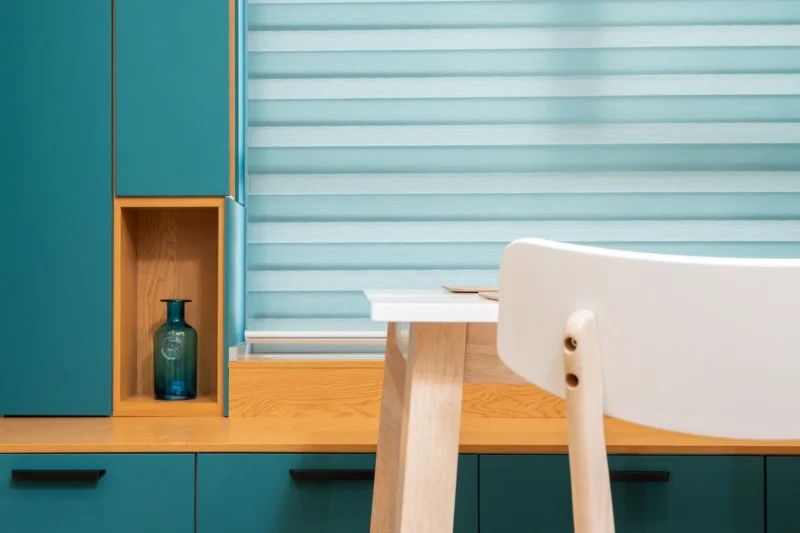
A roller blind is simpler. The fabric is either down, up or somewhere in between. Control comes from the fabric choice: blackout, dim-out, sunscreen, thermal or moisture-resistant. The roller blinds vs venetian blinds guide covers the louvred alternative within blinds, which some people consider as a cheaper shutter lookalike.
Blinds vs shutters: how do they compare side by side?
Blinds and shutters compare differently across each factor that matters. Shutters lead on durability and adjustable light through louvres. Roller blinds lead on blackout, cost, depth needed and suitability for awkward windows. Neither is better everywhere, so the table below sets out where each one tends to perform best in a typical UK home.
| Factor | Shutters | Roller blinds |
|---|---|---|
| Light control | Fine adjustment by tilting louvres | Set by fabric choice and how far the blind is lowered |
| Blackout | Light can slip between louvres and around panel edges | Blackout fabric stops light passing through; fit controls edge gaps |
| Privacy | Good, with light still coming in at an angle | Good when lowered; sunscreen and day and night fabrics allow a view out by day |
| Insulation | Solid panels add a noticeable layer when closed | Thermal and blackout fabrics help; a tight fit improves results |
| Cleaning | Dust each louvre; wipeable | Occasional dusting or vacuuming; many fabrics can be spot cleaned |
| Lifespan | Very durable when well made | Durable, but fabric and mechanisms wear with use and sunlight |
| Depth needed | Needs frame depth and clearance for louvres and handles | Needs only bracket space; can face fit on the wall if the recess is shallow |
| Window types | Best on standard, bay and sash windows with room to open panels | Works on most windows including tilt-and-turn, skylights and wide glazing |
| Moisture | Depends on material; timber is not ideal in steamy rooms | Moisture-resistant fabrics suit bathrooms and kitchens |
| Motorisation | Available on some systems, less common | Widely available, including on large or hard-to-reach windows |
| Cost tendency | Usually higher per window | Usually lower per window |
Which is cheaper, blinds or shutters?
Roller blinds are usually cheaper than shutters for the same window. Shutters involve more material, a bespoke frame, hinged panels and more fitting time, which pushes the price up. A made-to-measure roller blind uses a single fabric panel and a simpler mechanism. Exact costs depend on size, fabric, controls and how many windows you need.
We do not quote shutter prices, because we do not sell them. For roller blinds, our guide to what roller blinds cost explains the factors that change the price, such as width, drop, fabric type and whether you choose chain, cordless or motorised operation.
The cost gap matters most when you are covering a whole house. Shutters on every window is a significant investment. Many homeowners compromise: shutters on the front bay where they make a visual statement, and roller blinds in bedrooms, bathrooms and the kitchen where function matters more than looks.
Do shutters or blinds block more light?
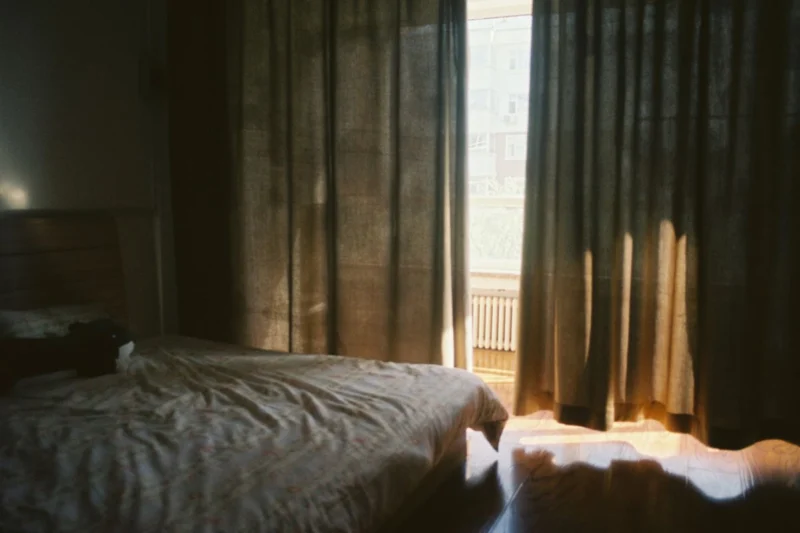
A blackout roller blind blocks more light than a standard shutter. Shutters are excellent at directing light, but light slips through the small gaps where louvres meet and around the edges of each panel. Blackout fabric stops light passing through entirely, so the only light comes round the edges, which a good fit keeps to a minimum.
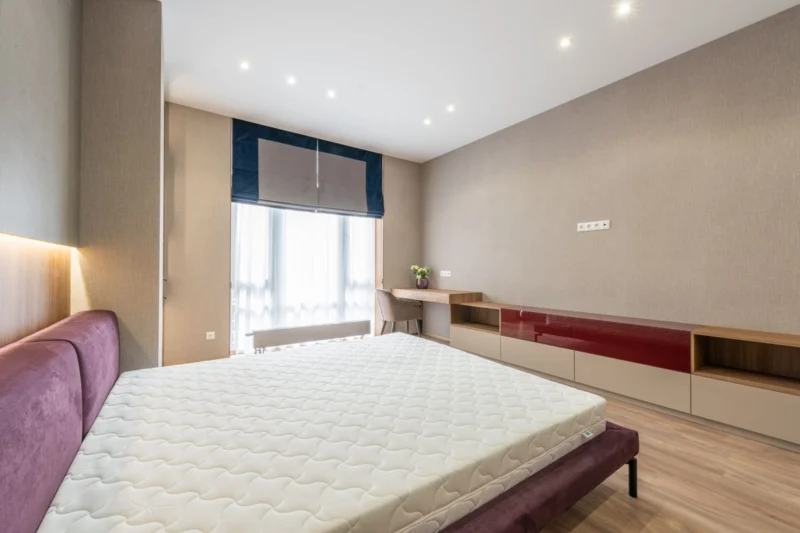
That makes a real difference in bedrooms. Nurseries, children’s rooms and bedrooms for shift workers usually need darkness more than they need angled daylight. Our blackout roller blinds are made for that job.
Where shutters shine is the middle of the day. Tilt the louvres and you get soft, indirect light with privacy from the street. Roller blinds can do something similar with the right fabric. Sunscreen fabric cuts glare and keeps some view out, and day and night blinds alternate sheer and solid stripes so you can adjust light and privacy.
Are shutters better insulation than blinds?
Shutters and blinds both reduce heat loss through windows when closed, and shutters tend to perform better. Historic England research on traditional single-glazed timber sash windows found closed shutters cut heat loss through the window by roughly half or more, while a plain roller blind reduced it by over a third, and more when tightly fitted.
Those figures come from Historic England’s research into the thermal performance of traditional timber sash windows. The study also found that a roller blind with a reflective surface facing outwards performed much better than a plain one, and that the fit mattered: tightly fitted blinds did better.
Two caveats matter. First, the tests used single-glazed sash windows, which lose far more heat than modern double glazing, so the benefit in a newer home will be smaller in absolute terms. Second, both options only help when closed. For Victorian and Edwardian houses that still have original sashes, either is a worthwhile addition. Our thermal roller blinds are designed with this in mind.
How long do shutters last compared with blinds?
Shutters generally last longer than roller blinds because they are rigid and have fewer parts that wear. Well-made timber or composite shutters can stay in service for many years with basic care. Roller blinds are durable too, but the fabric can fade in strong sun and the chain, spring or motor eventually needs attention.
Lifespan depends heavily on use and position. A blind raised and lowered twice a day in a sunny south-facing room works harder than one in a north-facing spare room. Things that help any roller blind last:
- Lower and raise it smoothly rather than yanking the chain.
- Let a damp blind dry fully before rolling it up.
- Choose moisture-resistant fabric for bathrooms and kitchens.
- Clean gently following the fabric’s care guidance.
With roller blinds, a worn mechanism or damaged fabric can often be repaired or replaced on its own. With shutters, a damaged louvre or hinge usually means specialist repair.
When do shutters win?
Shutters win when the look of the window matters as much as function and the budget allows. They suit period bay windows, sash windows in Victorian and Edwardian terraces, and rooms where adjustable daylight and street privacy are the priority. Many buyers also see shutters as a premium feature, although that is perception rather than a guaranteed return.
Situations where shutters are a strong choice:
- Period bay windows: shutters follow the angles of a bay and give a clean, architectural finish that suits original features.
- Street-facing living rooms: café-style or tier-on-tier shutters keep the lower window private while letting light in at the top.
- Durability: hard-wearing panels suit busy homes.
- Consistent street view: shutters look uniform from outside, which some owners value on terraced streets.
- Resale perception: they are often seen as a quality upgrade, although no window covering guarantees a higher sale price.
When do roller blinds win?
Roller blinds win when you need full blackout, a lower budget, a slim fit in a small or shallow recess, a moisture-resistant option for a bathroom, or a covering for very large glazing. They are also easier to motorise, and they fit windows where hinged shutter panels would clash with handles, taps or furniture.
- Full blackout: blackout fabric gives a darker bedroom than louvres.
- Budget: covering several windows costs less.
- Small or shallow recesses: a roller blind needs only bracket space and can face fit on the wall if the recess is too shallow.
- Bathrooms: moisture-resistant roller blinds handle steam better than timber.
- Large glazing: wide windows and glazed doors in new-build flats suit roller blinds, which roll away almost completely.
- Motorisation: motorised roller blinds are straightforward, which helps with high or hard-to-reach windows.
- Tilt-and-turn windows: a roller blind fitted above the window can clear the opening sash.
How much space do shutters need compared with roller blinds?
Shutters need more space than roller blinds. A shutter frame needs enough depth and clearance for the louvres to tilt and the panels to swing open without hitting window handles, sills or furniture. A roller blind needs only enough depth for its brackets, and if the recess is shallow it can be fitted on the wall above instead.
This is often the deciding factor in modern homes. Many uPVC windows have projecting handles that get in the way of louvres. Panels that open into the room need clear space in front of the window, which is awkward above a kitchen sink or behind a bed. Roller blinds avoid that problem because they simply roll up.
When we measure for roller blinds, we check handle clearance, the depth of the recess and anything that might obstruct the fabric. If the recess is too shallow, we fit the blind on the wall above so it hangs clear of the handles.
Can you have shutters in some rooms and blinds in others?
Mixing shutters and roller blinds across a home is common and often the most sensible approach. Shutters go where their look matters most, typically the front bay or the main living room. Roller blinds go in bedrooms, bathrooms, kitchens and awkward windows, where blackout, moisture resistance or a slim fit matter more than appearance.
Some people also layer: shutters for daytime privacy, with a blackout roller blind behind for bedroom darkness. That only works if there is enough depth for both, so it needs careful measuring. If you are also considering soft furnishings, our guide to roller blinds vs curtains explains how fabric blinds and curtains compare.
Common mistakes when choosing between blinds and shutters
The most common mistakes when choosing between blinds and shutters are buying for looks without checking the window, assuming shutters give blackout, and forgetting about depth and handles. Each of these can leave you with a covering that looks good in photos but does not suit how you use the room.
- Expecting blackout from shutters: louvres let light slip through at the edges.
- Ignoring handles: projecting uPVC handles can stop louvres or panels working.
- Putting timber in steamy rooms: moisture can affect some materials.
- Forgetting swing space: opening panels need clear room in front of the window.
- Choosing one product for every room: needs in a bedroom differ from a living room.
Choosing for homes in London, Essex and North Kent
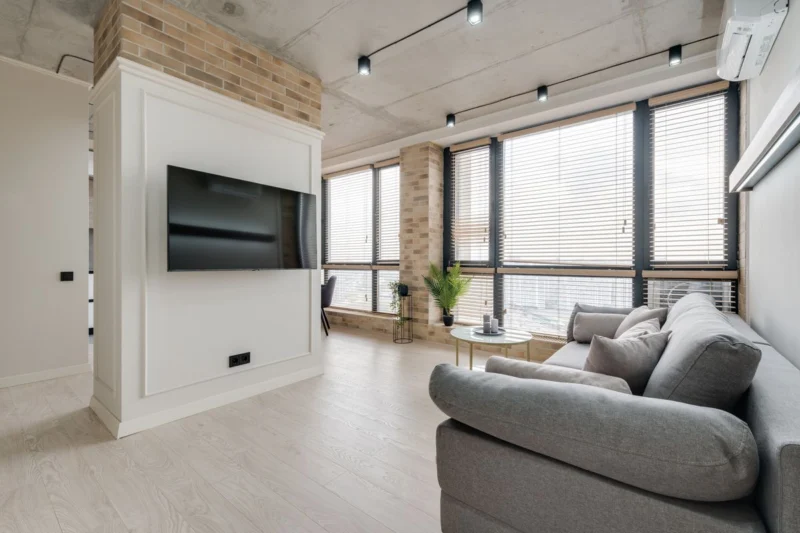
Homes across London, Essex and North Kent cover a wide mix of window types, which affects the choice. Victorian terraces often have bays and sashes that suit shutters in the front room. 1930s semis tend to have bays and deep sills. New-build flats in East London have wide glazing that suits roller blinds and motorisation.
HD Blinds fits made-to-measure roller blinds only, not shutters. If roller blinds suit some or all of your windows, we offer a free home measure across London, Essex and North Kent. We measure every window, bring fabric samples and give a written quote with no obligation, and our own team does the fitting.
Key takeaways
- Shutters usually cost more; roller blinds usually cost less per window.
- Blackout roller blinds give a darker room than shutters.
- Shutters tend to insulate better, but a tightly fitted or reflective roller blind also helps.
- Shutters suit period bays; roller blinds suit bathrooms, shallow recesses, large glazing and motorisation.
- Many homes mix both, room by room.
- HD Blinds fits roller blinds only, not shutters.
Frequently asked questions
Are shutters more expensive than blinds?
Shutters are usually more expensive than roller blinds for the same window. They use more material, need a bespoke frame and take longer to fit. Roller blinds use a single fabric panel and a simpler mechanism. Actual prices depend on window size, material and controls, so compare written quotes for your own windows.
Do shutters block out light completely?
Shutters do not usually block light completely. Even when closed, light can slip between louvres and around the edges of panels. If you need a dark bedroom for sleep, a blackout roller blind is usually more effective. Some people fit a blackout blind behind shutters where there is enough depth for both.
Are blinds or shutters better for a bathroom?
For most bathrooms, moisture-resistant roller blinds are the more practical choice. They are designed to cope with steam and can be wiped clean. Some shutter materials also handle moisture, but timber is not ideal in steamy rooms. Roller blinds also suit small bathroom windows and shallow recesses better than hinged panels.
Do shutters add value to a house?
Shutters are often seen as a quality feature, particularly on period bay windows, and some buyers like them. However, no window covering guarantees a higher sale price. It is best to choose shutters or blinds for how you use each room now, rather than as an investment for resale.
Does HD Blinds fit shutters?
No. HD Blinds measures, supplies and fits made-to-measure roller blinds only. We do not supply or fit shutters. If roller blinds suit your windows, we offer a free home measure across London, Essex and North Kent, bringing fabric samples and giving a written quote with no obligation to go ahead.
Thinking about new blinds?
We measure and fit across London, Essex and North Kent. The visit is free and there is no obligation.