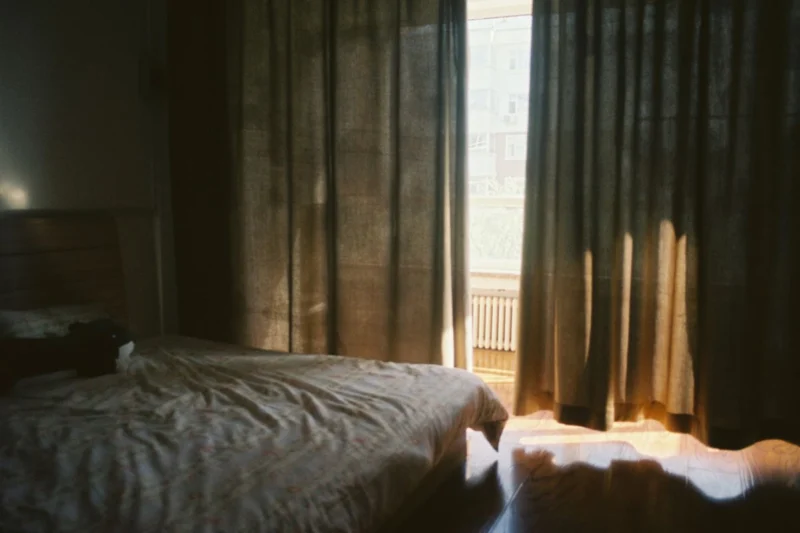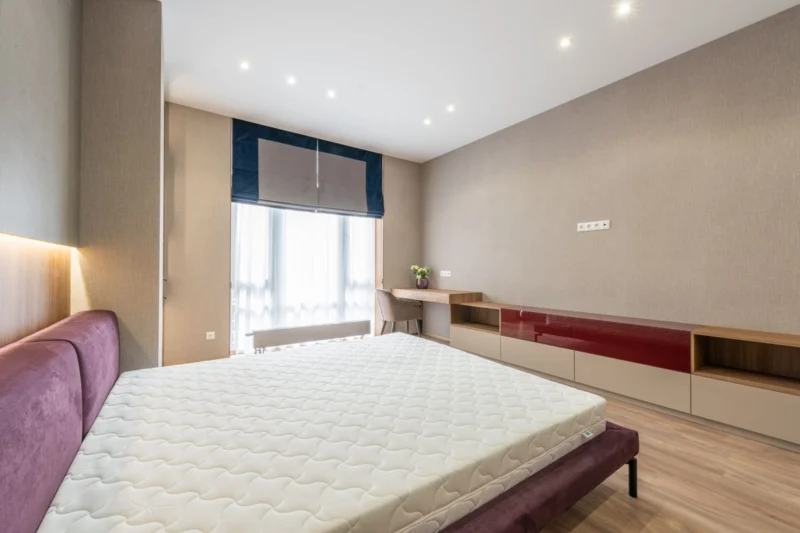
The first night in a new home often shows you exactly which windows matter. Street lights shine into the bedroom, the bathroom faces the neighbours, and the front room feels like a shop window once the lamps go on. A little planning of blinds for a new home before the keys arrive means you can fix the rooms that matter and let the rest wait.
Quick answer: Buy blinds for the bedrooms first, then the bathroom and any room that faces the street or a neighbour. Living rooms at the back, spare rooms, hallways and landings can usually wait a few weeks. Measure every window while the house is empty, then order in phases, or all at once if the budget allows.
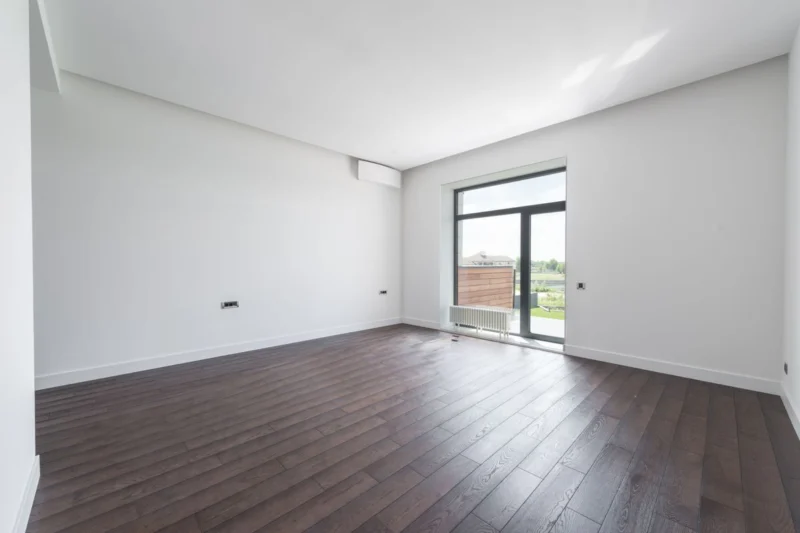
Which rooms need blinds first in a new home?
The rooms that need blinds first in a new home are the ones where you sleep, wash or can be seen from outside. That usually means the main bedroom, any children’s room, the bathroom and the front room if it faces the pavement. These cover sleep, privacy and security, which matter from the first night.
Put them in this order for most houses and flats:
- Main bedroom. Poor sleep in the first week of a move makes everything harder. A blackout fabric stops street lights and early summer sunrise.
- Children’s bedrooms. Children tend to be more sensitive to light and routine. A blackout blind helps keep bedtime normal in an unfamiliar room.
- Bathroom and en suite. Frosted glass helps, but it is not always enough at night when the light is on. A moisture-resistant fabric copes with steam.
- Street-facing rooms. A front room on a busy road, or a ground-floor flat, is on show every evening. Privacy here also means passers-by cannot see what is inside a house that is still full of boxes.
If you have only a small budget at completion, spending it on these four spaces gives you the biggest change to how the house feels to live in.
Which windows can wait for blinds?
Windows that can wait for blinds are the ones nobody overlooks and you do not sleep near. Rear living rooms facing a private garden, spare rooms, landings, hallways and utility rooms are the usual candidates. Leaving them a few weeks costs you little privacy and gives you time to see how light moves through the house.
There is a good reason to delay some rooms even if money is not tight. Living with a room for a few weeks tells you things a viewing never does:
- Whether the afternoon sun makes the kitchen or lounge too hot or causes glare on the TV.
- Whether a neighbour’s upstairs window looks straight into your garden room.
- Where the furniture actually ends up, which affects how far a blind should drop.
- Whether you want the room bright and open, or cosy in the evening.
The kitchen is a borderline case. If it faces the street or a shared path, move it up the list. If it looks onto your own garden, it can usually wait. When you get to it, a moisture-resistant or wipeable fabric copes best with cooking steam and splashes.
When should you measure windows for blinds in a new house?
You should measure windows for blinds in a new house while it is empty, ideally during a pre-completion visit or on the day you get the keys. Empty rooms let you reach every recess, check handles and radiators, and see the full window without sofas, beds or boxes in the way.
Once furniture arrives, measuring gets harder and mistakes creep in. A wardrobe in front of a bay or a bed under a window means you are stretching and guessing. Measure in millimetres, and measure the width at the top, middle and bottom of the recess, because older walls are rarely square.
Things to note for each window:
- Inside or outside the recess. Decide now. A recess fit looks neat. An outside fit covers more of the frame and blocks more light.
- Handle clearance. Tilt-and-turn and uPVC handles can stop a blind sitting flush inside the recess. When we measure, handle clearance is one of the first things we check.
- Radiators and sills. A radiator under the window affects how far the blind should drop.
- Tiles and plaster. Bathroom and kitchen tiles, or crumbling plaster in older homes, affect where brackets can go.
Our step-by-step guide on how to measure for roller blinds covers the method in detail. If you would rather not measure yourself, a free home measure means we take every measurement ourselves, including the awkward bays and handle clearances.
How do you get privacy on the first night before blinds arrive?
Privacy on the first night before blinds arrive comes from temporary fixes: adhesive paper blinds, frosted window film, a spare sheet on a tension rod, or simply keeping lights low in overlooked rooms. None are pretty, but they buy you time to choose properly rather than rushing a permanent decision in week one.
A few practical options, roughly from quickest to most effective:
- Temporary paper pleated blinds. Cheap, stick on with adhesive strips and need no drilling. They block light reasonably well but tear easily.
- Static cling frosted film. Good for bathrooms and front doors. It gives daytime privacy but still glows at night when the light is on.
- Sheets or blankets on a tension rod. Crude but effective for bedrooms, and useful for blocking light.
- Swap rooms around. Sleep in the room that faces the garden for a week if the front bedroom is bright.
If you have young children, check any temporary blind with a cord or chain before you hang it. Anything with a loop should have a safety device fitted, and cots and beds are best kept away from windows.
How do you plan a whole-house blind order?
A whole-house blind order works best when you list every window, decide what each room needs from its blind, then split the list into must-have now and can-wait. Measuring everything in one visit, even if you order in stages, keeps fabrics consistent and saves repeating the job later.
- Walk the house and number every window. Include small ones: landing windows, cloakrooms and glazed doors are easy to forget.
- Note what each room needs. Darkness, privacy, glare control, moisture resistance or warmth. This decides the fabric, not the colour.
- Check which windows are overlooked. Stand outside at dusk with the lights on inside. It is the quickest privacy test there is.
- Measure everything at once. Even if you only order the bedrooms first, you will have the rest ready.
- Choose a fabric family. From the street, matching colours across the front windows look tidy even if the inside rooms differ.
- Split the order into phases. Phase one covers bedrooms, bathroom and street-facing rooms. Phase two covers the rest.
- Get costs before you commit. Our roller blind price estimator gives a quick guide, and the roller blinds cost guide explains what moves the price.
Ordering several rooms together means one fitting visit rather than several, which also means less disruption while you are still unpacking.
What type of blind suits each room in a new home?
The type of blind that suits each room in a new home depends on what the room is for. Bedrooms need blackout, bathrooms need moisture resistance, living rooms need light control and privacy, and sunny rooms benefit from sunscreen fabric. Matching fabric to use matters more than matching colours or patterns.
| Room | Priority | Main job | Fabric to consider |
|---|---|---|---|
| Main bedroom | First | Sleep, privacy | Blackout |
| Children’s bedroom | First | Sleep, safety | Blackout, cordless or with safety devices |
| Bathroom, en suite | First | Privacy, steam | Moisture-resistant |
| Street-facing lounge | First | Privacy in the evening | Dim-out or day and night |
| Kitchen | Second, unless overlooked | Glare, easy cleaning | Moisture-resistant or wipeable |
| Rear living room | Second | Glare, heat, mood | Sunscreen or light filtering |
| Home office | Second | Screen glare | Sunscreen |
| Spare room, landing, hall | Later | Occasional privacy | Light filtering |
Street-facing living rooms suit a day and night roller blind, which lets you keep some daylight while blocking the view in. Bedrooms facing east get the earliest light in summer, so blackout matters most there.
Do new-build homes need different blinds?
New-build homes often need slightly different blinds because of large glazed areas, tilt-and-turn windows, shallow recesses and extra moisture while the building dries out. None of this rules out roller blinds, but it affects fitting position, handle clearance and fabric choice, especially in bathrooms and kitchens.
New-build flats in East London and across Essex commonly have floor-to-ceiling glazing, Juliet balconies and tilt-and-turn windows. Tilt-and-turn handles sit on the face of the frame and can clash with a blind, so the blind often needs to sit outside the recess or on the frame above.
New homes also carry moisture from construction. The NHBC’s advice on moisture in new homes explains that building materials retain moisture that dries out over time, and recommends keeping trickle vents open, using extractor fans and heating the home well. For blinds, this is a reason to choose moisture-resistant fabric in bathrooms and to raise blinds during the day so glass can dry.
If you own a leasehold flat, check your lease before drilling into window frames or reveals. Some developments set rules on what can be fixed where, particularly on communal-facing windows.
What about older houses with bays and sash windows?
Older houses with bays and sash windows need careful measuring because recesses are rarely square, plaster can be soft and bays have several angled windows. Victorian terraces and 1930s semis across London, Essex and North Kent often have front bays, which are also usually the street-facing room you want covered first.
A front bay is typically the first priority in these homes because it faces the pavement. Splitting a bay into separate blinds for each window gives the best coverage and lets you open the centre while keeping the sides closed. Our page on roller blinds for bay windows explains the options.
Sash windows raise a different point. If the sashes have shutter boxes, deep reveals or old draught gaps, a blind that sits inside the recess can help reduce draughts in the evening. Measure all three widths, as sash recesses often narrow towards the top.
How do you keep children safe with new blinds?
Keeping children safe with new blinds means choosing cordless or motorised options where possible, and making sure any corded blind has child safety devices fitted to BS EN 13120. Move cots, beds and climbable furniture away from windows, and check any blinds the previous owners left behind.
New houses often come with old blinds. Blinds from before the safety standards changed may not have any safety features at all. RoSPA’s blind cord safety advice notes that blinds installed before 2014 may lack these devices, and that a new blind with a looped cord or chain should come with one already fitted or included.
When we fit a blind with a chain, the safety device required by BS EN 13120 goes in at the same visit. For nurseries and children’s rooms, many families prefer to avoid cords altogether. See our guide to child-safe roller blinds for cordless options.
Common mistakes when buying blinds for a new home
Common mistakes when buying blinds for a new home include measuring after furniture arrives, ordering every room in a rush, forgetting handle clearance, and choosing fabric by colour rather than purpose. Most are avoided by measuring the empty house carefully and giving lower-priority rooms a few weeks before you commit.
- Using the old home’s sizes. Standard window sizes vary more than people expect, even between flats in the same block.
- Buying ready-made to save time. Fixed sizes rarely fit old recesses and leave light gaps at the sides.
- Keeping unsafe inherited blinds. Check cords and chains before children move in.
- Measuring only once per window. A single width is risky in older homes.
- Forgetting the view from outside. Mismatched colours on the front elevation can look untidy from the street.
Getting help with blinds for a new home locally
Getting help with blinds for a new home locally is simplest with a free home measure. We visit homes across London, Essex and North Kent, measure every window ourselves, bring fabric samples and give a written quote with no obligation. That suits new movers who want the whole house measured at once.
You can phase the order after the visit, starting with bedrooms and street-facing rooms, and order the remaining rooms once you know how you live in them. If you want to see fabrics first, free fabric samples can be sent by post. Check whether we cover your postcode on our areas we cover page.
Key takeaways
- Bedrooms, bathrooms and street-facing rooms come first. Rear rooms, spare rooms and landings can wait.
- Measure every window while the house is empty, even if you order in stages.
- Use temporary paper blinds or frosted film for privacy in the first week.
- Choose fabric by what the room needs: blackout, moisture resistance, glare control or privacy.
- Check inherited blinds for cord safety and fit safety devices or replace them.
- New builds need attention to handle clearance and moisture. Older homes need careful measuring of bays and uneven recesses.
Frequently asked questions
Should I buy blinds before or after moving in?
Measure before you move in, ideally while the house is empty, and order the priority rooms straight away. Bedrooms and street-facing rooms benefit from blinds as soon as possible. Other rooms can be ordered once you have lived there for a few weeks and understand the light and privacy in each space.
Which room should get blinds first?
The main bedroom usually comes first, because good sleep matters most during a move. A blackout fabric deals with street lights and early sunrise. Children’s rooms, bathrooms and any room facing the street follow closely, as they cover sleep routines, privacy and security for a house that is still full of boxes.
Do blinds have to match throughout the house?
Blinds do not have to match inside, but windows on the front of the house look tidier from the street when colours are similar. Many people choose a neutral shade for street-facing windows, then pick different fabrics and colours for rear rooms, bedrooms and bathrooms based on what each room needs.
Can I keep the blinds the previous owners left?
You can keep inherited blinds if they fit well and are safe. Check that any looped cord or chain has a working child safety device, as older blinds may have none. Also check for mould, sun damage and faulty mechanisms. Blinds that do not fit the recess properly are usually worth replacing.
Is it worth getting a whole house measured at once?
Measuring the whole house at once saves repeat visits and gives you a complete list of sizes, even if you order in stages. It also makes it easier to keep fabrics consistent across the front of the house and to plan a budget, because you know every window from the start.
Thinking about new blinds?
We measure and fit across London, Essex and North Kent. The visit is free and there is no obligation.