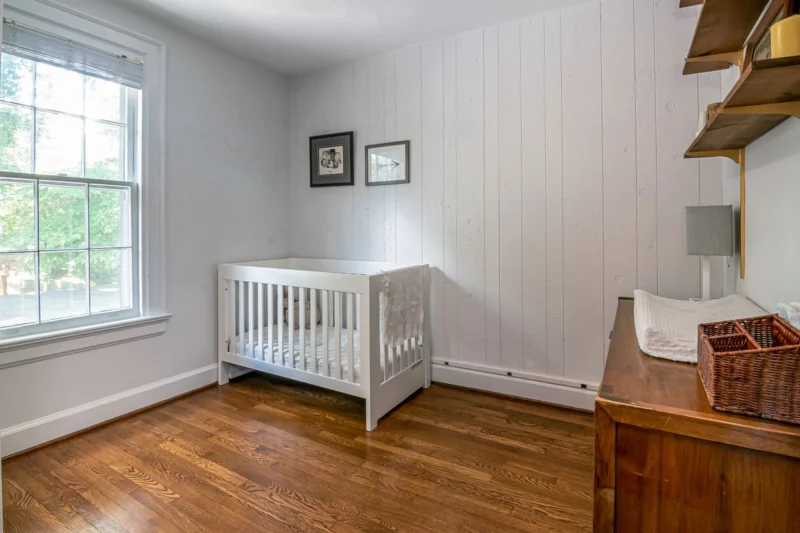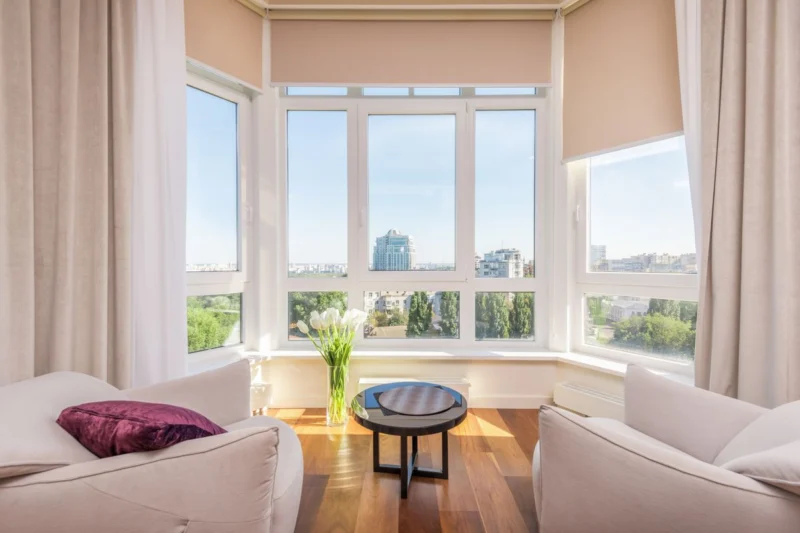
A blind that feels completely private at noon can put your living room on show at 9pm. Most people only find this out when they walk up their own path after dark and look back at the house. The reason is simple physics, and once you understand it, choosing the right fabric for each room gets much easier.
Quick answer: Yes, people can often see through blinds at night if the room is lit and the fabric is sheer or open weave. Privacy depends on which side is brighter. Sunscreen and light filtering fabrics lose privacy after dark, blackout fabric keeps it, and day and night blinds depend on how the bands are set.
Can people see through blinds at night?
People can see through blinds at night whenever the room behind them is brighter than the street outside and the fabric lets light pass. Sheer, open weave and light filtering fabrics show shapes, movement and sometimes detail once the lights are on. Opaque fabrics, such as blackout, stop anyone seeing in whatever the lighting.
How much someone can actually see depends on three things: how open the fabric is, how bright your room is, and how dark it is outside. Bright ceiling spotlights behind a sheer sunscreen fabric can show the room almost as clearly as an uncovered window, just softened.
It also depends on distance. Someone walking past a ground floor window a metre from the glass sees far more than a neighbour across the road. That is why the same blind can feel fine in a first floor bedroom and completely wrong in a front room that opens onto the pavement.
Why does blind privacy flip after dark?
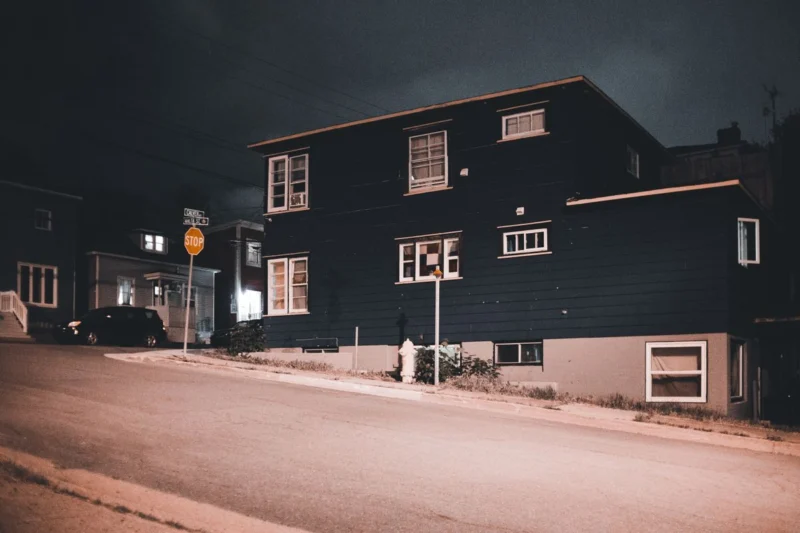
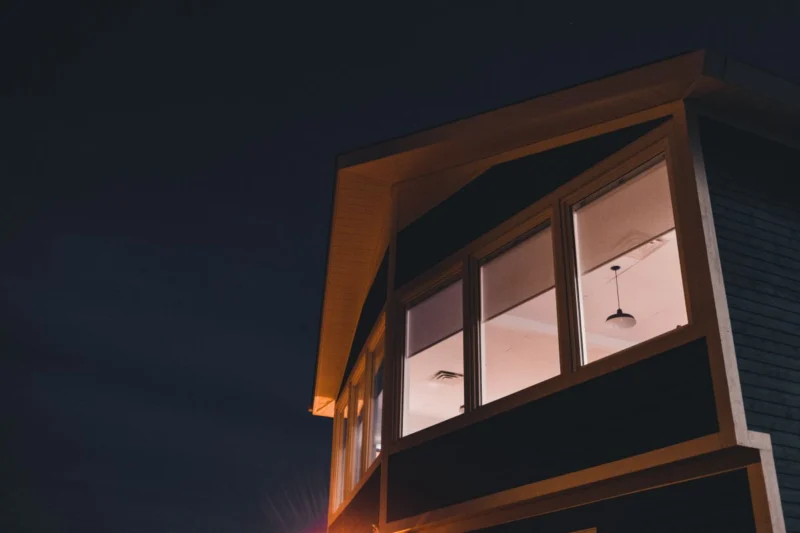
Blind privacy flips after dark because your eyes, and everyone else’s, see into whichever space is brighter. In daytime the street is brighter than your room, so passers by see mostly reflected glare. At night your lit room becomes the bright side, so light passing through the fabric carries the view outwards instead.
This is the same effect that makes a window act like a mirror from inside at night. Stand in a lit kitchen and look at the dark garden: you see your own reflection, not the lawn. Stand in the garden and look back: you see straight into the kitchen. Nothing about the glass has changed, only the balance of light.
A fabric that lets light through works the same way. The fabric has not become thinner at night. The light has simply moved to the other side.
That is also why privacy can change at dusk rather than at a fixed time. On a grey winter afternoon, with the lights on at 4pm, a room can be more visible than it will be on a bright summer evening at 8pm.
How do different blind fabrics behave at night?
Different blind fabrics behave very differently at night. Sunscreen fabrics give the least privacy once lights are on, light filtering and dim-out fabrics show silhouettes and blurred shapes, day and night blinds offer privacy only when the solid bands are aligned, and blackout fabrics give full privacy because almost no light passes through.
The table below sums up what to expect in a typical lit room. It is about privacy only. If you are choosing between blackout and sunscreen for glare, heat or sleep, our blackout vs sunscreen comparison covers that ground in detail.
| Fabric type | Daytime privacy | Night privacy with lights on | What people outside may see |
|---|---|---|---|
| Sunscreen (solar) | Good from outside | Low | Shapes, movement and often room detail |
| Light filtering (sheer) | Good | Low to moderate | Silhouettes and blurred shapes |
| Dim-out | Very good | Moderate to good | A glow, with silhouettes close to a bright light |
| Day and night (bands closed) | Good | Moderate | A glow and faint shapes where the bands overlap |
| Blackout | Complete | Complete | At most a thin line of light at the edges |
Sunscreen fabrics at night
Sunscreen fabrics are woven with small openings so you can see out while cutting glare and heat. Those openings work both ways. With the room lit and the street dark, people outside can usually make out furniture, a television and anyone moving about. Our page on solar roller blinds explains where they work best.
Light filtering and dim-out fabrics at night
Light filtering fabrics are closed weaves that let a soft glow through. At night they usually hide detail but show shapes, especially anyone standing between a lamp and the window. Dim-out fabrics are heavier and let less light through, so they give noticeably better night privacy while still keeping a room from feeling like a cave.
Day and night fabrics at night
Day and night blinds use alternating sheer and solid horizontal bands on two layers of fabric. When the solid bands line up over the sheer ones, you get privacy. When the sheer bands line up, you get light and a partial view. At night, the blind needs to be set to the closed position, and even then the overlap is never perfect, so a little light and some shape can leak through. See day and night roller blinds for how the bands work.
Blackout fabrics at night
Blackout fabrics have a coating or dense weave that stops light passing through the fabric itself. That means nobody can see into the room through the blind, whatever lights are on. The only give away is light at the edges, which is a matter of fit rather than fabric.
Do blinds show silhouettes at night?
Blinds show silhouettes at night when a person or object sits between a bright light and a fabric that lets light through. The fabric acts like a screen for a shadow puppet show. Light filtering and dim-out fabrics are most prone to it. Blackout fabric does not show silhouettes, because no light passes through it.
Silhouettes depend far more on where your lights are than most people realise. A ceiling light in the middle of the room, with you standing near the window, throws a sharp, life size shadow onto the blind. A lamp beside the window, pointing into the room, casts your shadow away from the glass instead.
Simple changes help:
- Put lamps between yourself and the window rather than behind you.
- Use lower, warmer lighting in the evening in street facing rooms.
- In bedrooms and bathrooms, choose fabrics dense enough that silhouettes do not matter.
How do you get daylight by day and privacy at night?
Getting daylight by day and privacy at night usually means layering, either two blinds on the same window or one blind that can switch between modes. A common pairing is a sheer or sunscreen blind for daytime with a blackout or dim-out blind behind it for evening. Day and night blinds do a similar job in one.
A double roller setup puts two blinds on one window, usually on a shared bracket, so each can be raised or lowered on its own. Whether a double setup fits depends on the depth of your window recess, the handle positions and how the window opens. Ask at your measure whether it suits your window.
Other ways to layer:
- Blind plus curtains. A sunscreen or light filtering blind for daytime, with lined curtains drawn at night. This works well in bay windows and living rooms.
- Day and night blinds. One blind, two modes. The privacy is good rather than total, so they suit rooms where some glow at night is acceptable.
If you are torn between two fabrics, the most reliable test is to see them in your own window after dark. Our free fabric samples are posted out so you can hold them up to a lit window at night and check from outside.
What about street facing ground floor rooms in terraced houses?
Street facing ground floor rooms in terraced houses are the hardest privacy problem at night. The window is often a metre or two from the pavement, at eye level, with streetlights and passers by on the other side. Sheer fabrics that work upstairs can leave these front rooms on show, so denser fabric or layering is usually needed.
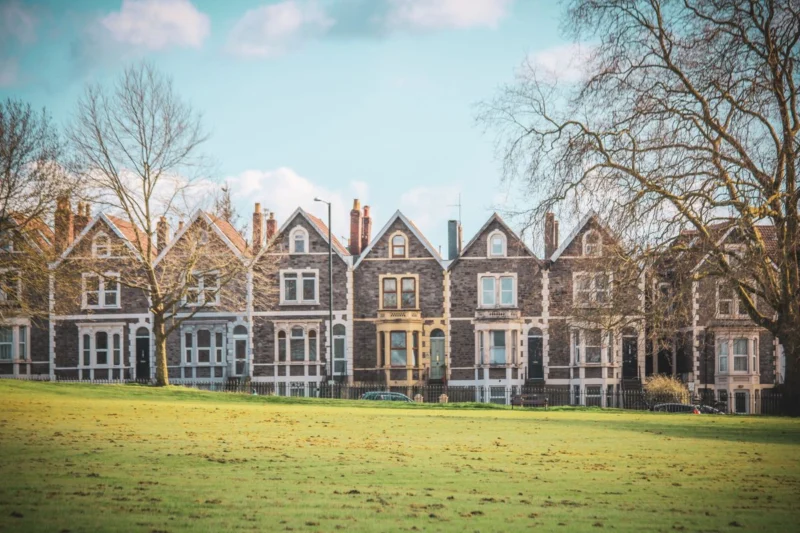
This is common in the Victorian and Edwardian terraces found across London, Essex and North Kent, where front bays sit right on a short front garden or open straight onto the street. New build flats at ground level in East London often have the same issue, with large windows facing shared paths or courtyards.
Things that help in these rooms:
- Treat the front room differently. It is fine for the front room to have a denser fabric than the rest of the house. Matching every blind is less important than being comfortable in the room.
- Think about the lower pane. Most views in from the street hit the lower half of the window. A blind lowered to the sill blocks this completely. A blind half down leaves the most visible part uncovered.
- Check the bay. Each window in a bay faces a different angle. Side windows often look straight at neighbours rather than the street. Our guide to roller blinds for bay windows covers how bays are usually fitted.
Do closed blinds at night help with home security?
Closed blinds at night help with home security mainly by hiding what is inside. They do not stop a break in. Police advice is that burglars target homes they think contain valuables, so keeping laptops, phones, keys and bags out of view from windows is sensible, and a closed opaque blind does that after dark.
The Metropolitan Police’s facts about residential burglary say that burglars target homes they think will contain valuables. Northamptonshire Police’s winter advice recommends keeping keys and valuables out of sight and reach from downstairs doors and windows, and using timer switches on lights when it gets dark before you are home.
A closed blackout or dim-out blind hides what is in the room once the lights are on. A sunscreen blind does very little for this at night. Keys on a table by the front window are still a risk, blind or no blind, and good locks and lighting matter far more than any window covering. A blind is a privacy product that supports common sense security habits, not a security product.
This is general information, not security advice. For advice on your own home, contact your local police force’s crime prevention team.
How can you test your blinds for privacy at night?
Testing your blinds for privacy at night takes five minutes. Wait until it is fully dark, close the blinds, switch on the lights you normally use, and look at the house from the street and from any neighbouring windows. What you see from outside is exactly what everyone else sees.
- Wait until it is properly dark, then close every blind to its usual evening position.
- Turn on your usual evening lights, including any spotlights and the television.
- Ask someone to walk about the room and stand near the window.
- Go outside and look from the pavement, the end of the garden or across the road.
- Check the edges of each blind for light gaps as well as the fabric itself.
- Note which rooms feel exposed and whether a lighting change would be enough.
Often the answer is a mix: one or two rooms need a denser fabric, and the rest just need a lamp moving.
Common mistakes with blinds and night time privacy
Common mistakes with blinds and night time privacy include choosing fabric from a daytime showroom visit, using sunscreen fabric alone in street facing rooms, forgetting silhouettes in bathrooms, leaving blinds half down and ignoring light gaps at the edges of the blind. Each one leaves a room more visible after dark than expected.
- Judging fabric by day only. Every fabric looks private in a bright showroom. Check samples against a lit window at night.
- Sunscreen alone in a front room. Great for glare and daytime views, poor for evening privacy at street level.
- Light filtering fabric in bathrooms. A lit bathroom with a light fabric shows clear silhouettes. Choose a denser fabric, or rely on obscured glass as well.
- Leaving blinds halfway. Half down covers the top of the window, which is the least visible part from the street.
- Ignoring edge gaps. Even a blackout blind leaks light and glimpses at the sides if it hangs loosely outside the recess.
Getting privacy advice for your windows locally
Getting privacy advice for your windows locally is easiest with someone standing in the room. We offer a free home measure across London, Essex and North Kent, bring fabric samples you can hold against your own windows, and give a written quote with no obligation. We check which rooms face the street and how each window opens.
At the measure, it is worth mentioning which rooms you use in the evening and whether any ground floor rooms are used as bedrooms. You can check whether we cover your postcode on our areas we cover page.
Key takeaways
- Privacy depends on which side of the blind is brighter, so it flips when you switch the lights on at night.
- Sunscreen fabrics give the least night privacy, blackout gives full privacy, and light filtering, dim-out and day and night fabrics sit in between.
- Silhouettes come from lights behind you. Moving lamps can fix a lot.
- Street facing ground floor rooms in terraces usually need denser fabric or a second layer.
- Closed opaque blinds hide valuables after dark, which supports police advice, but a blind is not a security device.
- Test fabric samples against your own lit windows at night before deciding.
Frequently asked questions
Can you see through sunscreen blinds at night?
Yes, usually. Sunscreen fabrics have small openings so you can see out by day. At night, with the room lit and the street dark, those openings let people outside see shapes, movement and often room detail. For evening privacy, pair a sunscreen blind with a denser blind or curtains behind it.
Are day and night blinds private at night?
Day and night blinds are fairly private at night when set so the solid bands cover the sheer ones. The overlap is not perfect, so some light and faint shapes can show through, especially close to a bright lamp. They suit rooms where a soft glow is acceptable, rather than rooms needing total privacy.
Do blackout blinds give complete privacy at night?
Blackout fabric gives complete privacy through the fabric itself, because almost no light passes through. The only weak points are the edges. A blind fitted inside the recess with small side gaps leaks very little. A loose blind outside the recess can show thin lines of light and brief glimpses at the sides.
Why can I see into my neighbour’s house at night but not in the day?
Because at night their lit room is brighter than the street, so light carries the view outwards through the glass and any open fabric. In daytime, the bright outdoors reflects off their window and hides the dimmer room behind it. The same effect applies to your own home, so check yours after dark.
What is the best blind for a front room facing the street?
For a street facing front room used in the evening, a dim-out or blackout fabric gives the most reliable night privacy. If you want daylight and a view out as well, layer a sheer or sunscreen blind with a denser blind or curtains, or choose day and night blinds for a single blind solution.
Thinking about new blinds?
We measure and fit across London, Essex and North Kent. The visit is free and there is no obligation.