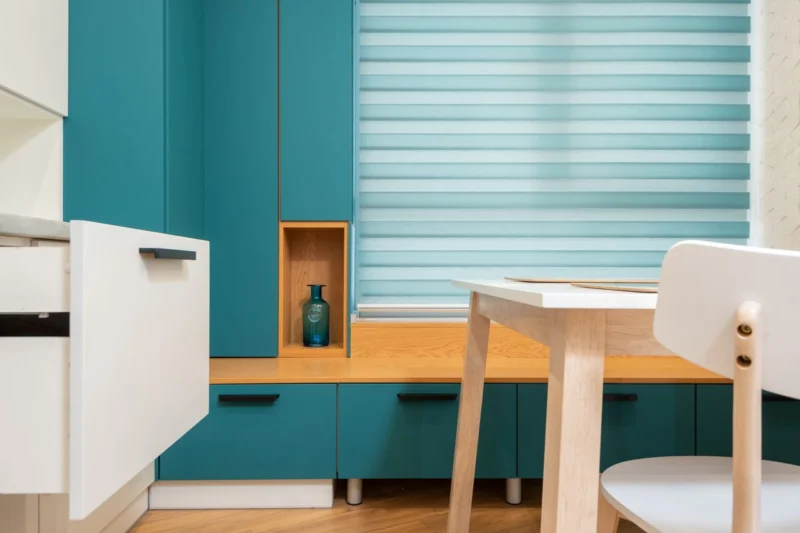
Black spots along the bottom of a roller blind are a common sight in bathrooms, bedrooms and kitchens. The blind is rarely the cause. Mould on blinds is usually where a wider moisture problem shows up first, because the blind sits right next to the coldest, wettest surface in the room.
Quick answer: Mould grows on blinds when warm, moist air meets cold window glass, condenses, and the water soaks into the fabric. A closed blind traps that damp air against the pane. Stop it by cutting moisture at source, ventilating with trickle vents and extractor fans, keeping heating steady, raising blinds during the day and choosing moisture-resistant fabric in wet rooms.
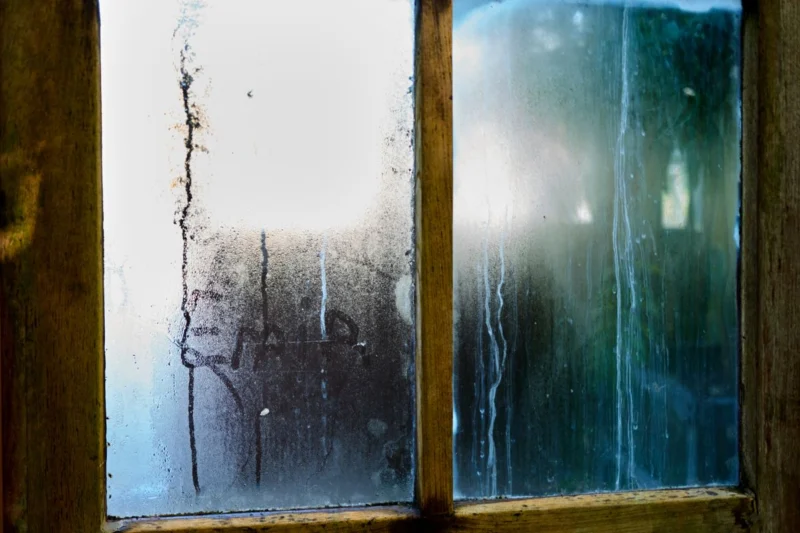
Why do roller blinds go mouldy?
Roller blinds go mouldy because they sit next to cold glass where condensation forms, and the fabric absorbs and holds that water. Mould spores are present in almost every home, and they only need moisture, a little warmth and something to feed on, such as dust, skin cells or soap residue on the fabric.
The pattern of mould on a blind tells you a lot. Spots along the bottom edge usually mean water is running down the glass and wicking into the fabric where it touches the sill. Spots across the whole back face usually mean the blind stays down for long periods against a pane that is wet every night. Mould on the front face is less common and suggests the room itself is very humid.
A blind that has been rolled up while damp will also grow mould inside the roll, out of sight, which is why some people only notice the problem when they pull the blind down one morning.
Why does condensation form behind blinds?
Condensation forms behind blinds because a closed blind keeps the room’s warmth away from the window, so the glass gets colder. Moist air still seeps around the edges, meets that colder pane and turns to water. The blind also slows the air movement that would otherwise help the glass and sill dry out.
Air can hold more water vapour when it is warm. When it touches a surface below its dew point, the excess water comes out as droplets. Windows are usually the coldest surface in a room, particularly single glazing, older double glazing and the metal spacer bars around the edge of sealed units.
This creates a trade-off. A well-fitted blind keeps heat in the room, which is good for comfort and bills. But the colder, more still air pocket behind it makes condensation on the glass more likely. Neither is a reason to avoid blinds. It simply means the moisture has to be managed in other ways.
Where does the moisture in a home come from?
The moisture that causes condensation in a home comes mostly from everyday living: breathing, cooking, showering, bathing, boiling kettles and drying laundry indoors. If that water vapour cannot escape through ventilation, it builds up in the air and settles on the coldest surfaces, which are usually windows, external walls and the corners of rooms.
The government’s guidance, Understanding and addressing the health risks of damp and mould in the home, describes moisture from normal activities such as showering, drying laundry and cooking building up in a home when it cannot be removed. The main culprits, in order of how easy they are to fix:
- Drying clothes on radiators or airers indoors. A major source in flats without outdoor space.
- Cooking without lids or an extractor. Boiling pans release steam straight into the kitchen.
- Showers and baths with the door open. Steam spreads into bedrooms and hallways.
- Sleeping with windows and vents closed. People breathe out moisture all night, which is why bedroom windows are often streaming by morning.
- Building moisture in new homes. New builds release water from construction materials as they dry out.
Which rooms and homes are most at risk of mould on blinds?
The rooms most at risk of mould on blinds are bathrooms, en suites, kitchens and bedrooms, especially those on north-facing or exposed walls that stay cold. Homes most at risk include older properties with single glazing, flats where laundry is dried indoors, and new builds that are still drying out.
Across London, Essex and North Kent, a few common housing types are especially prone:
- Victorian and Edwardian terraces with single-glazed sash windows. The glass is very cold in winter, and small back bathrooms often have limited ventilation.
- Post-war and 1960s flats with small kitchens and bathrooms, sometimes without working extractor fans.
- New-build flats, including many in East London, which are well sealed and heavily glazed. Laundry dried indoors has nowhere to go if trickle vents are shut.
For new homes, the NHBC’s guidance on moisture in new homes explains that building materials hold moisture that dries out over time. It advises keeping trickle vents open, using extractor fans and cooker hoods whenever steam is produced, and keeping the home well heated in cold weather.
How do you stop condensation behind blinds?
To stop condensation behind blinds, reduce the moisture you produce, remove what remains with ventilation, and keep the glass as warm and dry as possible. In practice that means extractor fans on, trickle vents open, steady heating, laundry dried outside or in a ventilated space, and blinds raised during the day.
- Open trickle vents and keep them open. These small slots at the top of many modern windows provide background ventilation. They are often shut because of draughts, which lets moisture build up.
- Use extractor fans properly. Run the bathroom fan during and after a shower, and the cooker hood whenever you cook. Check fans actually pull air: a sheet of tissue should hold against the grille.
- Keep heating steady. Rooms that are heated briefly and then left cold have cold walls and glass for most of the day. Low, steady heat is better for condensation than short blasts.
- Dry laundry outside where you can. If you must dry indoors, use one room with the door shut and a window open or a dehumidifier running.
- Raise blinds during the day. This lets air reach the glass and sill so any overnight condensation can dry out.
- Wipe the glass and sill each morning in winter. A squeegee or cloth removes water before it runs into the blind or the window frame.
- Air bedrooms briefly each morning. Opening a window for a few minutes clears the moist air from overnight.
The Energy Saving Trust’s draught-proofing advice makes the same point from the other direction: when you seal a home against draughts, keep extractor fans, wall vents and trickle vents working, because ventilation helps avoid damp.
Does blind fabric affect mould and condensation?
Blind fabric does affect mould, although it does not affect condensation itself. Moisture-resistant fabrics with a coating or PVC content absorb little water and can be wiped clean, so mould has less to grip. Untreated fabrics soak up moisture and hold it against the fibres, which is where mould takes hold.
| Fabric type | How it behaves with moisture | Best rooms |
|---|---|---|
| Moisture-resistant (coated or PVC-based) | Repels water, dries quickly, can be wiped | Bathrooms, en suites, kitchens |
| Coated blackout | Backing resists water better than plain fabric, but edges can still absorb | Bedrooms with moderate condensation |
| Sunscreen (solar) mesh | Open weave lets air through and dries fast | Kitchens and living rooms where privacy is less critical |
| Standard untreated fabric | Absorbs water and holds it in the weave | Dry rooms with little condensation |
No fabric is mould-proof. A film of grease, soap or dust on any surface can feed mould if it stays damp. But a moisture-resistant fabric gives you a much better chance. Our page on waterproof roller blinds explains how these fabrics work, and our guide to the best roller blinds for bathrooms covers choosing one for a wet room.
Should there be a gap between a blind and the window?
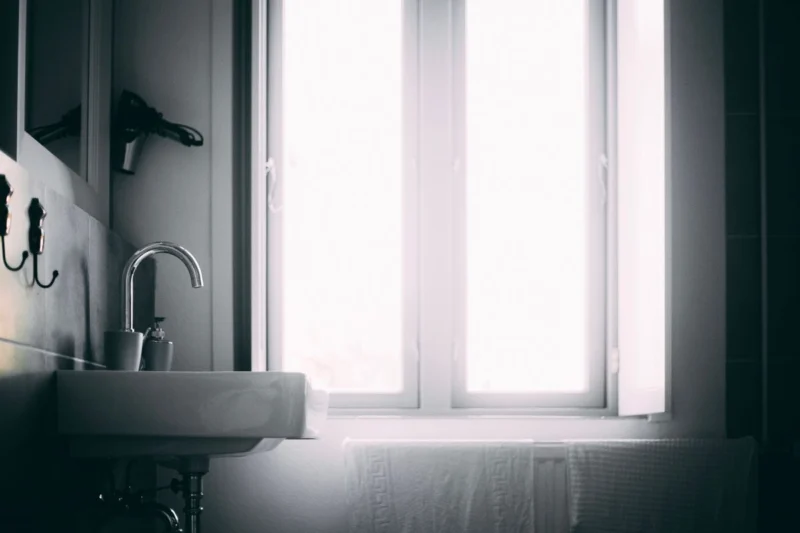
There should be a small gap between a blind and the window, so the fabric never touches wet glass and air can move behind it. A blind that rests against the pane or sits on a wet sill will wick water straight into the fabric. Handles and sill depth decide how much gap is possible.
When we measure a bathroom or kitchen window, we look at where the fabric will hang in relation to the glass, the handle and the sill. A few practical points:
- Keep the bottom bar just clear of the sill. This stops the fabric soaking up water that pools on the sill overnight.
- Consider an outside-recess fit in shallow recesses. If a recess is too shallow to keep fabric off the glass, fitting the blind on the wall above can give more clearance.
- Avoid fabric draping over wet tiles. In showers and over baths, position the blind so it hangs clear of splash zones.
There is a balance here. A very tight fit keeps more heat in but leaves less air movement behind the blind. In rooms that suffer from condensation, a little more clearance and a routine of raising the blind each morning usually works best.
Can you clean mould off a roller blind?
You can often clean light surface mould off a roller blind, particularly a moisture-resistant or coated fabric, by lowering it fully, cleaning gently with a suitable cleaner and letting it dry completely before rolling it up. Deep, stained or recurring mould in an untreated fabric usually means the blind needs replacing.
Keep it brief and careful. Never roll a blind up while it is damp, and check the product label before using any cleaner, as some can damage coatings or fade colours. Our step-by-step guide on how to clean roller blinds covers methods for each fabric type.
Cleaning only deals with the symptom. If the mould comes back within weeks, the moisture problem in the room has not been solved, and a new blind will go the same way.
Is mould on blinds a health risk?
Mould on blinds is a sign of damp, and government guidance treats damp and mould in the home as a health risk that should be dealt with promptly. People with asthma or other lung conditions, weakened immune systems, children and older people are identified as being more vulnerable to its effects.
The same government guidance is clear that the underlying causes need tackling, not just the visible mould. Painting over it or wiping it away without fixing the moisture source does not solve the problem.
If you rent, report persistent damp and mould to your landlord in writing. If you are worried about your health or a family member’s, speak to your GP or pharmacist. We are blind fitters, not health or damp specialists, so our advice stops at the window.
When is condensation a sign of a bigger problem?
Condensation is a sign of a bigger problem when it continues despite good ventilation and steady heating, when damp patches appear on walls away from windows, or when moisture shows up between the panes of a double-glazed unit. These point to leaks, failed window seals, penetrating damp or ventilation faults that blinds cannot fix.
- Misting between the panes means the seal on the double-glazed unit has failed. The unit needs replacing.
- Damp patches with tide marks on walls, especially low down, can indicate rising or penetrating damp.
- Wet window reveals and frames despite dry glass may indicate a leak around the frame.
- Musty smells in cupboards and behind furniture suggest the whole room is too humid.
In any of these cases, a damp surveyor, window specialist or your landlord needs to look at the building. A new blind will only hide the symptom for a while.
Common mistakes that cause mouldy blinds
Common mistakes that cause mouldy blinds include keeping them down all day, rolling them up while damp, closing trickle vents, drying laundry in bedrooms, switching off extractor fans early, and choosing untreated fabric for bathrooms. Most are habits rather than faults with the blind, which means they are cheap to put right.
- Leaving a bathroom blind down after a shower with the fan off.
- Letting the bottom bar rest in water on the sill.
- Treating mould on the blind without looking at the window and walls.
- Replacing a mouldy blind with the same fabric and expecting a different result.
Getting the right blinds for damp-prone rooms locally
Getting the right blinds for damp-prone rooms locally starts with a free home measure. Across London, Essex and North Kent, we measure every window ourselves, check recess depth, sill and handle clearance, and bring moisture-resistant fabric samples so you can see and feel them. You get a written quote with no obligation.
That visit is a good time to talk through where condensation is worst and how the blind should sit to stay clear of wet glass. Check whether we cover your area on our areas we cover page.
Key takeaways
- Mould on blinds is a symptom of condensation, which comes from moist air meeting cold glass.
- Closed blinds make glass colder and slow drying, so raise them during the day.
- Cut moisture at source: extractor fans, open trickle vents, steady heating, laundry dried outside where possible.
- Choose moisture-resistant fabric for bathrooms and kitchens, and keep fabric clear of wet glass and sills.
- Never roll up a damp blind. Clean light mould promptly and replace heavily stained fabric.
- Persistent damp and mould should be dealt with at the cause. Tenants should report it to their landlord.
Frequently asked questions
Why is there black mould on the bottom of my roller blind?
Black mould along the bottom of a roller blind usually means condensation is running down the glass, pooling on the sill and soaking into the lower edge. Keep the bottom bar just clear of the sill, wipe the glass each morning, improve ventilation and raise the blind during the day so it can dry.
Do blinds cause condensation?
Blinds do not create moisture, but a closed blind keeps room heat away from the glass, making it colder, and slows the air movement that dries it. That makes existing condensation worse. The moisture itself comes from cooking, washing, breathing and drying laundry, so ventilation and heating are the real fix.
What is the best blind for a room with condensation?
A roller blind in moisture-resistant fabric is usually the best choice for a room with condensation. Coated and PVC-based fabrics repel water, dry quickly and can be wiped clean. Fit it so the fabric hangs clear of the glass and sill, and raise it during the day to let the window dry.
Should I keep trickle vents open in winter?
Yes. Trickle vents provide background ventilation that lets moist air escape, and the NHBC advises keeping them open to reduce condensation. Closing them to stop draughts usually makes condensation and mould worse. If the draught is uncomfortable, steady heating and a closed blind in the evening help more than shutting the vents.
Can a mouldy blind be saved?
A blind with light surface mould on a coated or moisture-resistant fabric can often be cleaned and dried fully before rolling. Heavy staining, mould inside the roll or mould in an untreated fabric usually means replacement is the better option. Either way, fix the moisture problem first or the mould will return.
Thinking about new blinds?
We measure and fit across London, Essex and North Kent. The visit is free and there is no obligation.