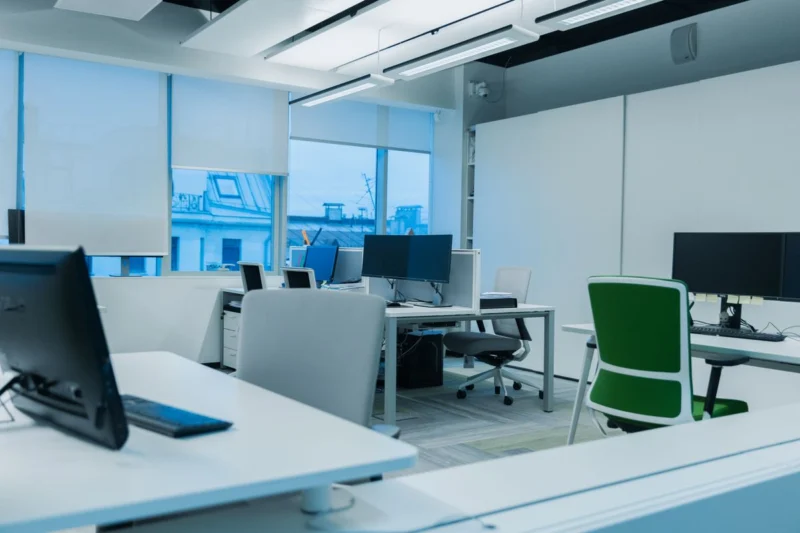
If you manage a school, an office or a house in multiple occupation, sooner or later someone will ask whether your blinds are fire retardant. The answer usually comes back to one British Standard: BS 5867. This guide explains what it covers, what the Types mean, and what paperwork you should expect when you buy.
Quick answer: BS 5867-2 is the British Standard for the flammability of fabrics used in non-domestic curtains, drapes and window blinds. It has three performance levels: Type A, Type B and Type C. Type B is the level most often specified for commercial buildings. Always ask for the test certificate for the exact fabric you are buying.
This guide is general information, not legal or fire safety advice. Your fire risk assessment and a competent fire safety adviser should decide what your building needs.
What is BS 5867-2?
BS 5867-2 is a British Standard published by BSI that sets flammability requirements for fabrics and fabric assemblies used in non-domestic curtains, drapes and window blinds. The current edition is BS 5867-2:2008. It specifies how a fabric must behave when a small flame is applied, so buyers can compare fabrics on a common basis.
The standard sits in two parts. Part 1 covers general requirements for curtains and drapes, while Part 2 deals with flammability, which is the part people mean when they say “BS 5867”. Part 2 references test methods including BS EN ISO 6941 and BS EN ISO 15025, plus cleansing and wetting procedures, according to BSI’s listing for BS 5867-2:2008.
Two things are worth knowing from the start. First, the standard is about the fabric, not the blind mechanism. Second, where a fabric is used as part of a layered construction, the assembly as a whole matters, not just one layer tested on its own.
What is the difference between Type A, Type B and Type C?
Type A, Type B and Type C are the three performance levels in BS 5867-2, rising in strictness. Type A is the least demanding. Type B is the intermediate level and the one most often asked for in commercial settings. Type C adds a durability requirement, meaning the fabric must still perform after repeated washing.
| Type | Test basis | Cleansing | Typical role |
|---|---|---|---|
| Type A | BS EN ISO 6941, with a ten-second flame application | Tested before cleansing | Least demanding level, rarely specified for commercial work |
| Type B | BS EN ISO 15025 | Tested before cleansing | The level most commonly specified for non-domestic use |
| Type C | BS EN ISO 15025 | Tested before and after 50 cycles of a standard washing procedure | Where fabrics will be washed often and must keep their performance |
The test body SATRA explains that fabrics passing Type B are often regarded as suitable for non-domestic use in the contract market. It also notes that for Types A and B, testing after cleansing is sensible even though the standard tests before cleansing, using either the supplier’s recommended cleaning method or a simple water soak.
How is fabric tested under BS 5867-2?
BS 5867-2 testing involves hanging a sample of fabric vertically and applying a small gas flame for a set number of seconds. The laboratory then assesses how the fabric responds, including how far flames spread, whether holes form and whether burning debris or flaming droplets fall. The fabric passes or fails against the criteria for its Type.
A few practical consequences follow from how the test works:
- A certificate relates to a specific fabric. A different colourway, coating or backing may not be covered unless the certificate says so.
- Treatments and coatings change results. A blackout coating or a printed finish can affect how a fabric burns.
- Testing is done by laboratories. The certificate or test report should name the lab, the standard, the Type and the fabric reference.
What is the difference between inherently flame-retardant and treated fabrics?
Inherently flame-retardant fabrics are made from fibres that resist burning by their chemistry, so the property cannot wash out. Treated fabrics are ordinary fabrics given a flame-retardant finish after weaving. Some treatments are durable and survive cleaning; others are non-durable and can be reduced by washing, soaking or even heavy wet cleaning.
Which you choose depends on how the blind will be looked after:
- Inherently FR suits places where fabrics get cleaned often or where you want the property to last for the life of the blind without worrying about how it is cleaned.
- Durable treated fabrics can perform well after cleaning, which is what a Type C result demonstrates.
- Non-durable treated fabrics may lose performance if washed or soaked. They can be fine where blinds are only dusted or wiped, but the cleaning method matters.
Roller blinds are rarely machine washed, which helps. Most are vacuumed or spot cleaned in place. Even so, check the supplier’s cleaning instructions before anyone takes a sponge and detergent to a treated fabric. Our guide on how to clean roller blinds covers gentle methods.
When are fire-retardant blinds needed?
Fire-retardant blinds are usually needed when a building’s fire risk assessment, a specification, a landlord, an insurer or a contract calls for them. In England and Wales, the Regulatory Reform (Fire Safety) Order 2005 requires the responsible person for most non-domestic premises to carry out a suitable fire risk assessment and act on it.
The London Fire Brigade’s guide to fire safety law explains that the Order applies to almost all buildings other than individual private homes, including the shared areas of HMOs and blocks of flats. The responsible person is usually the owner, manager or occupier, and the assessment must be done by someone competent.
The Order does not list blind fabrics. What it does is require the responsible person to identify fire hazards and reduce the risks. Textiles near escape routes, heat sources or in areas where many people gather are the kind of thing a fire risk assessor may pick up, and specifying a BS 5867-2 fabric is a common way to address it.
Do schools need fire-retardant blinds?
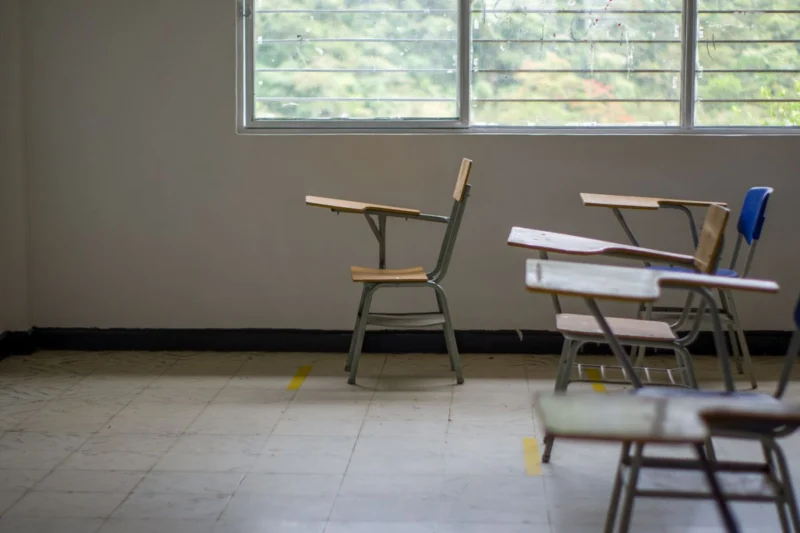
Schools often specify fire-retardant blinds because they are non-domestic premises covered by the Fire Safety Order, with many occupants, children who may need help evacuating, and escape routes that must stay safe. The fire risk assessment, the local authority or trust, or the project specification usually sets the requirement, commonly BS 5867-2 Type B.
Blinds in schools have extra considerations beyond fire performance:
- Child safety. Blinds with cords or chains need the safety devices required by BS EN 13120. Cordless or motorised roller blinds remove loops altogether.
- Classroom screens. Interactive whiteboards and projectors need glare control, so blackout or dim-out fabrics are common in teaching rooms.
- Durability. Blinds get pulled hard and often. A robust mechanism matters as much as the fabric.
- Cleaning regimes. Where cleaning staff use wet methods, inherently FR or durable treated fabrics make more sense.
Many schools across London, Essex and Kent are in older buildings with tall classroom windows, which means large blinds and heavy use. The fire requirement is only one line in a wider specification.
Do offices need flame-retardant blinds?
Offices need flame-retardant blinds when the fire risk assessment, the landlord, the fit-out specification or the insurer requires them. Many commercial landlords and fit-out contracts ask for BS 5867-2 Type B fabrics as standard, especially in multi-tenant buildings, even when a small single-occupier office might not have that requirement written down.
Before ordering office blinds, check:
- Your lease or building rules, which may set a fabric standard for anything fitted.
- Your fire risk assessment, and whether it mentions soft furnishings or window coverings.
- Any tender or fit-out specification from a managing agent or main contractor.
Office blinds also need to deal with screen glare, and a flame-retardant sunscreen or blackout fabric can do both jobs. Our commercial roller blinds page covers how we handle offices, schools and other workplaces.
Do HMOs and rented properties need fire-retardant blinds?
HMOs and blocks of flats have shared areas that fall under the Fire Safety Order, so the responsible person, usually the landlord or managing agent, must assess fire risk there. Blinds in hallways, stairwells and shared kitchens may be flagged by that assessment. Inside individual rooms, requirements depend on the licence, the assessment and any agent or insurer conditions.
Landlords of HMOs in areas with licensing schemes, which are common across London boroughs, should also check their licence conditions. For a practical view on choosing hard-wearing blinds for rental property, see our page on blinds for landlords. The key point is the same everywhere: if a flame-retardant fabric is required, you need the paperwork to prove it.
What certificate should you ask for with fire-retardant blinds?
Ask for the test certificate or test report for the exact fabric you are buying, showing the standard, the Type achieved and the fabric reference. A general claim that a fabric is “fire retardant” is not enough. Keep the certificate with your fire safety records so you can show it to an assessor, inspector or insurer.
- Name the standard. Confirm the certificate states BS 5867-2 and which Type: A, B or C.
- Match the fabric. Check the fabric name, reference and colour against what is on your quote.
- Check the lab. The document should name the testing laboratory and the date of test.
- Check cleansing. See whether it was tested before cleansing only, or after too.
- Ask about coatings. If the fabric is blackout coated or has a backing, confirm the certificate covers that version.
- File it. Store the certificate with your fire risk assessment and the location of each blind.
HD Blinds offers flame-retardant roller blind fabrics. When you ask for a quote, tell us the standard your assessment or specification requires, and ask for the test certificate for the specific fabric before you order.
Does cleaning affect fire-retardant blinds?
Cleaning can affect fire-retardant blinds made from treated fabrics, because some flame-retardant finishes are reduced by washing or soaking. Inherently flame-retardant fabrics keep their performance because it comes from the fibre itself. Type C certification shows a fabric has been tested after a set washing procedure, which gives more confidence for fabrics cleaned regularly.
Good habits for fire-retardant roller blinds:
- Follow the fabric supplier’s cleaning instructions.
- Dust or vacuum on a low setting with a brush attachment.
- Spot clean marks with a barely damp cloth rather than soaking.
- Do not re-spray blinds with off-the-shelf flame-retardant products and assume they now meet a standard.
- Replace fabrics that are damaged, faded or have been heavily cleaned, if their certification relied on a treatment.
Common mistakes
- Buying on the word “FR”. Without a certificate matching the fabric, you cannot show compliance.
- Assuming all colours are covered. Certificates can be colour or finish specific.
- Washing treated fabric. Soaking a non-durable treated fabric can undermine the property you paid for.
- Treating the standard as the whole answer. Fire safety also depends on escape routes, detection, layout and management.
Where can you get fire-retardant roller blinds in London, Essex and North Kent?
Fire-retardant roller blinds for schools, offices and HMOs can be measured, supplied and fitted by HD Blinds across London, Essex and North Kent. We visit to measure every window ourselves, bring flame-retardant fabric samples, and provide a written, no-obligation quote, with our own team fitting the blinds.
Tell us which standard and Type your fire risk assessment or specification asks for, and we will show you suitable fabrics. To book a free measure, request a quote.
Key takeaways
- BS 5867-2 sets flammability requirements for fabrics in non-domestic curtains, drapes and window blinds.
- Type B is the level most commonly specified; Type C adds testing after 50 wash cycles.
- Inherently FR fabrics keep their performance; treated fabrics may lose it through washing.
- The Fire Safety Order requires a fire risk assessment for most non-domestic premises and HMO common parts.
- Always ask for the test certificate for the exact fabric and file it with your fire records.
Frequently asked questions
What does BS 5867 Part 2 Type B mean?
It means the fabric has passed the Type B flammability test in BS 5867-2, using the BS EN ISO 15025 flame test. Type B is the intermediate of three levels and the one most often specified for non-domestic curtains and blinds in offices, schools, hotels and other commercial buildings.
Is it a legal requirement for office blinds to be fire retardant?
No law names blind fabrics directly. The Regulatory Reform (Fire Safety) Order 2005 requires a fire risk assessment for most non-domestic premises, and that assessment, your lease, a specification or your insurer may require flame-retardant fabrics. Check with your responsible person or fire safety adviser before ordering.
Can you make an ordinary blind fire retardant with a spray?
Sprays exist, but spraying a blind yourself does not give you a BS 5867-2 certificate. Compliance comes from laboratory testing of a specific fabric. If your assessment requires a certified standard, replace the fabric with one that has a test certificate showing the Type you need.
Do blackout blinds come in fire-retardant fabrics?
Yes, flame-retardant blackout fabrics are available and are often used in classrooms and meeting rooms with projectors. Coatings can affect fire performance, so ask for the certificate for the exact blackout fabric and colour you are ordering, rather than relying on a certificate for a similar fabric.
How long does a fire-retardant treatment last?
It depends on the fabric. Inherently flame-retardant fibres keep their performance for the fabric’s life. Durable treatments are designed to survive cleaning, which Type C testing checks. Non-durable treatments can be reduced by washing or soaking, so follow the supplier’s cleaning instructions closely.
Thinking about new blinds?
We measure and fit across London, Essex and North Kent. The visit is free and there is no obligation.