
Home › Thermal roller blinds
Thermal roller blinds, for windows that lose heat
A metallised backing that reflects warmth back into the room, and a trapped layer of still air between fabric and glass. Most of the benefit comes from how the blind is fitted rather than which fabric you pick, which is why this page spends more time on fitting than on fabric.
- Reflective backed fabrics
- Side channels available
- Measured for a close fit
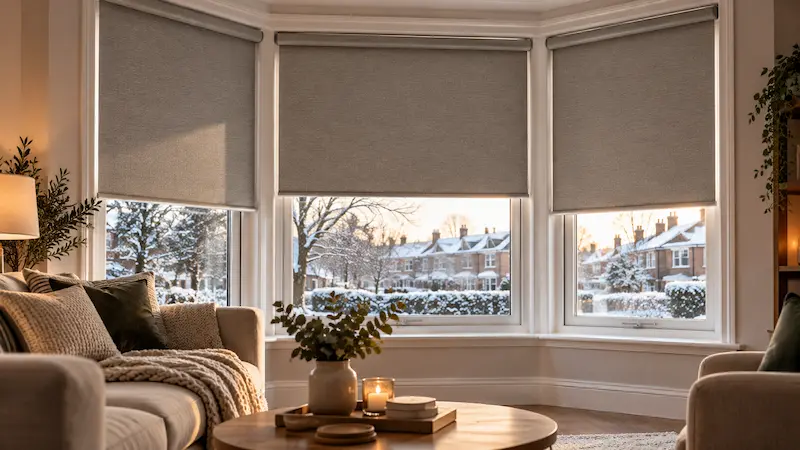
How a thermal blind works
Two things are happening, and they are worth separating because only one of them is about the fabric.
The reflective backing
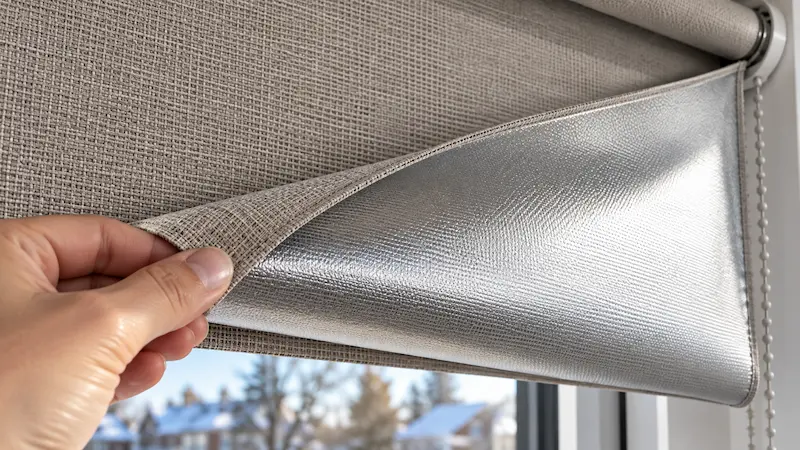
Thermal fabrics carry a metallised or foam-backed coating on the window side. Radiant heat from the room hits it and bounces back inwards instead of passing through the fabric and out through the glass. In summer the same surface works the other way, reflecting incoming solar radiation before it becomes heat in the room.
The trapped air: the bigger effect
Still air is a poor conductor of heat, which is the whole principle behind double glazing. A blind fitted close to the glass creates a pocket of air that cannot circulate, and that pocket does more to slow heat loss than the coating does.
Which leads to the single most useful thing on this page: how tightly the blind seals the window matters more than which thermal fabric you choose. A mid-range thermal fabric in side channels will outperform a premium one hanging loose inside a recess with gaps at the sides.
What we will not claim. You will find sites quoting precise percentages for heat saved. We do not, because the honest answer depends on your glazing, your window size, how cold it is outside and how the blind is fitted, and no supplier can know those from a product page. A thermal blind makes a real and noticeable difference to a cold window. It is not a substitute for double glazing.
Fitting is most of the job
If you are buying a thermal blind for performance rather than appearance, these are the decisions that actually change the outcome.
| Choice | Effect on heat loss | What it costs you |
|---|---|---|
| Inside the recess | Some benefit. Air still moves around the edges, so the pocket is leaky. | Nothing: it is the standard fit and the neatest look. |
| Outside the recess | Better. The blind overlaps the opening and seals the edges against the wall. | The blind sits proud of the wall rather than tucked into the reveal. |
| Side channels | Best. The fabric edge runs inside a track, so the air pocket is genuinely closed. | Additional cost per window, and the channels are visible. |
| Cassette or fascia at the top | Closes the gap above the roller, where warm air otherwise escapes upwards. | Small additional cost. Also tidies the look. |
The top gap is the one people forget. Warm air rises, so an open roller at the top of the window lets the air pocket vent continuously. A cassette is a modest cost for a meaningful improvement, and on a thermal blind we would usually recommend it.
Summer as well as winter
A reflective surface does not care which direction heat is travelling. In July, a thermal blind on a sunny window reflects solar radiation back out before the room warms up.
That said, if summer overheating is your main problem rather than winter cold, look at sunscreen and solar blinds instead. They are designed for it, and they let you keep the view while they do it: a thermal blind has to be down and closed to work, which means sitting in a dark room on a sunny day.
Which windows benefit most
A thermal blind pays back fastest where the window is worst. On a modern A-rated double-glazed unit the difference is marginal. On the windows below it is obvious from the first cold evening.
Single glazing
The strongest case by a distance. Period properties across Rainham, Upminster and the older Essex streets often still have single-glazed sashes or leaded lights that cannot be replaced for planning or cost reasons. A thermal blind is the cheapest meaningful improvement available.
Older double glazing
Units from the eighties and nineties perform far below current standards, and blown units perform worse still. If a window is misted between the panes, its insulating value has largely gone and a thermal blind is doing real work.
North-facing rooms
No solar gain to offset the loss, all winter. These rooms feel cold even when the heating is on, and the window is usually why.
Bay windows
A bay is a lot of glass in a shallow projection with cold surfaces on three sides, so it behaves like a heat sink at the end of the room. Fitted as separate blinds per pane. See roller blinds for bay windows: thermal fabric makes a noticeable difference to how the seating area near it feels.
Rooms you heat and then leave
Bedrooms, spare rooms, a home office used part of the day. Slowing the rate at which the room loses what you have just paid to heat is where the value is.
Conservatories
Unheated glass boxes that are freezing in January and unbearable in July. Thermal fabric helps the winter half of that problem. For the summer half see conservatory blinds, where solar fabric usually does more.
Condensation: read this
Any blind held closed against a cold window all winter traps moist air against cold glass, and moisture condenses there. Thermal blinds make this more likely, not less, precisely because they are better at sealing the air pocket: the glass behind them stays colder than it otherwise would.
It is manageable and it is not a fault with the blind:
- Raise the blind during the day so the glass can dry.
- Open the window briefly each morning, especially in bedrooms.
- Wipe the glass if water has pooled on the sill overnight.
Left unattended all winter, condensation leads to mould spotting along the bottom of the blind and on the frame. Ten seconds of ventilation a day prevents it. We would rather tell you now than be called out in March.
Appearance and cleaning
Thermal fabrics are heavier and more substantial than standard ones, and the coating means they hang with less drape and a flatter face. Most people find they look reassuringly solid. They also make the roll at the top slightly bulkier, which is another argument for a cassette.
Clean them the way you would any coated fabric: dust with a soft brush or vacuum on low suction, spot-clean with a barely damp cloth, no detergent and no scrubbing. The metallised backing is the part doing the work and it does not survive being scoured.
Thermal, blackout or solar?
These three get confused constantly because all of them affect heat in some way.
| Fabric | Main job | Effect on heat |
|---|---|---|
| Thermal | Keeping warmth in during winter | The best of the three for heat retention. Reflects room heat back inwards. |
| Blackout | Making a room dark | A useful side effect: dense fabric slows heat loss, but it is not optimised for it. |
| Solar / sunscreen | Cutting glare and summer heat gain | Best for keeping heat out. Does little to keep warmth in. |
Some fabrics combine properties: a blackout fabric with a reflective backing gives you darkness and insulation on the same blind, which is often the right answer for a north-facing bedroom. Ask us at the measure and we will bring the ones that do both.
What it costs
Cheaper than glazing, and it happens next week
Thermal fabrics sit above standard ones in price, and channels or a cassette add to that. Set against replacing a window, it is a small fraction of the cost and it is fitted in a morning.
Whether it pays for itself in heating depends on your glazing, the room and how cold the winter is, so we will not put a number on it. What we can tell you is what the blind costs, in writing, after measuring.
Related
Worth reading alongside
Blackout
Often combined with a thermal backing for north-facing bedrooms.
Read moreSunscreen & solar
The better answer if summer overheating is the real problem.
Read moreConservatory blinds
Freezing in winter, boiling in summer: how we handle both.
Read moreBay windows
A lot of cold glass in one place. Measured per pane.
Read more


